

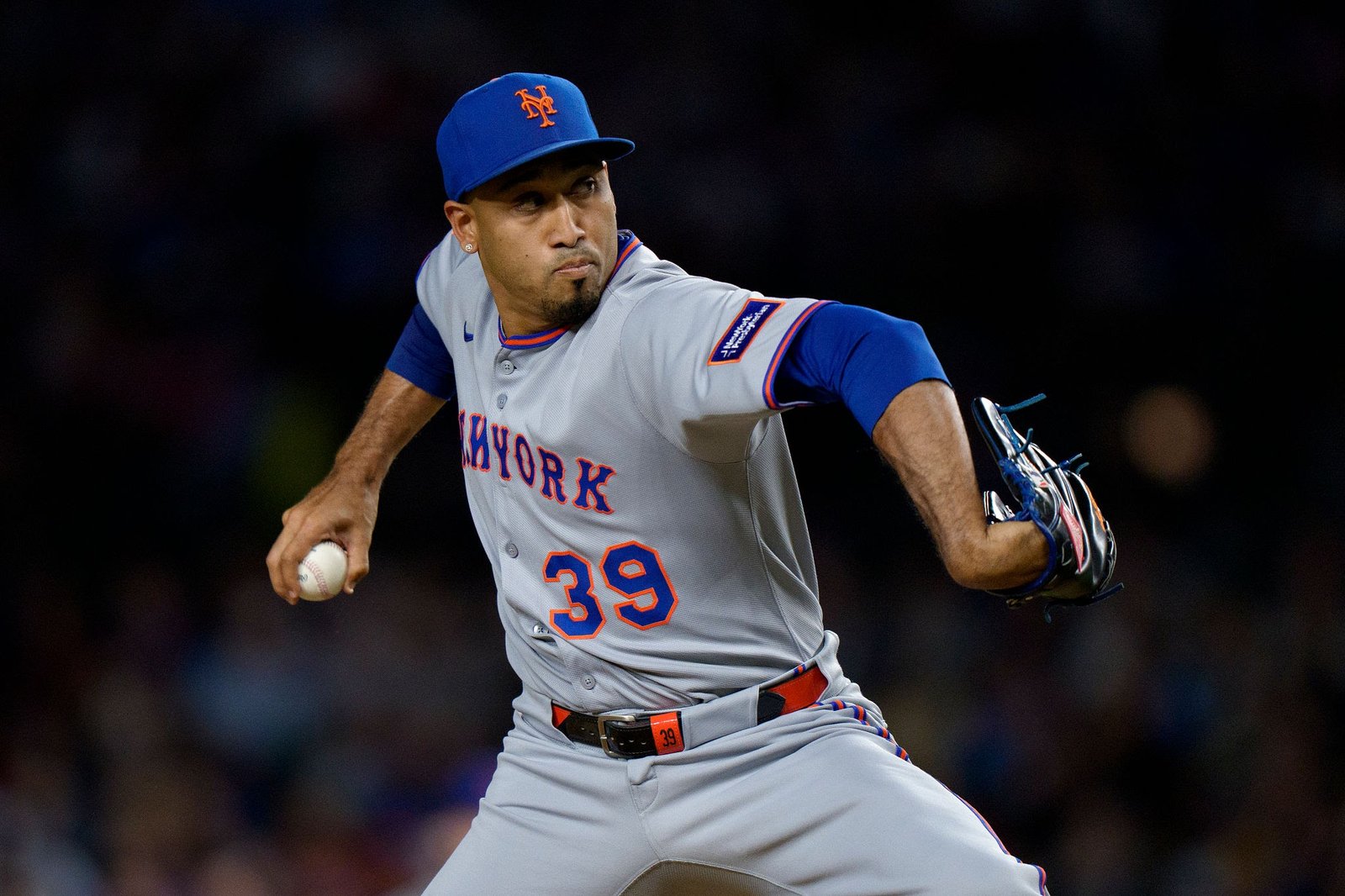
Overview Table
| Category | Details |
|---|---|
| Full Name | Edwin Orlando Díaz |
| Nationality | Puerto Rican |
| Profession | Professional Baseball Pitcher |
| Primary Role | Closer |
| Known For | High-velocity fastball, elite strikeout ability, dramatic mound presence |
| Signature Traits | Explosive delivery, emotional intensity, rhythmic timing, mental resilience |
| Core Strength | Ability to dominate late-game situations with velocity, command, and psychological pressure |
| Career Identity | One of the most electric closers of his generation |
| Playing Philosophy | Attack early, overwhelm mentally, strike decisively |
| Cultural Impact | Symbol of Puerto Rican pride and modern pitching evolution |
INTRODUCTION
Edwin Díaz is more than a closer. He is an archetype. In a sport often defined by its slow rhythm, quiet tension, and mathematical precision, Díaz enters the field like a controlled storm. His presence carries energy, emotional temperature, and a sense of inevitable confrontation. He represents the evolution of the modern relief pitcher: a specialist whose job is not simply to finish a game, but to embody dominance in its purest form—velocity, intimidation, and psychological command.
This 4000-word analysis explores Edwin Díaz as an athlete, a technician, a psychological competitor, and a cultural icon. It does not examine only the pitches he throws but the deeper structure of his identity, the emotional pressures that shape a closer, the mechanics that give his fastball its violence, the mental discipline required to stand alone in the ninth inning, and the cultural resonance he carries as a Puerto Rican star performing on the world’s biggest stage.
Edwin Díaz is not merely a pitcher; he is a case study in modern competitive architecture. His journey is a blueprint of transformation, resilience, tactical evolution, and artistic athleticism.
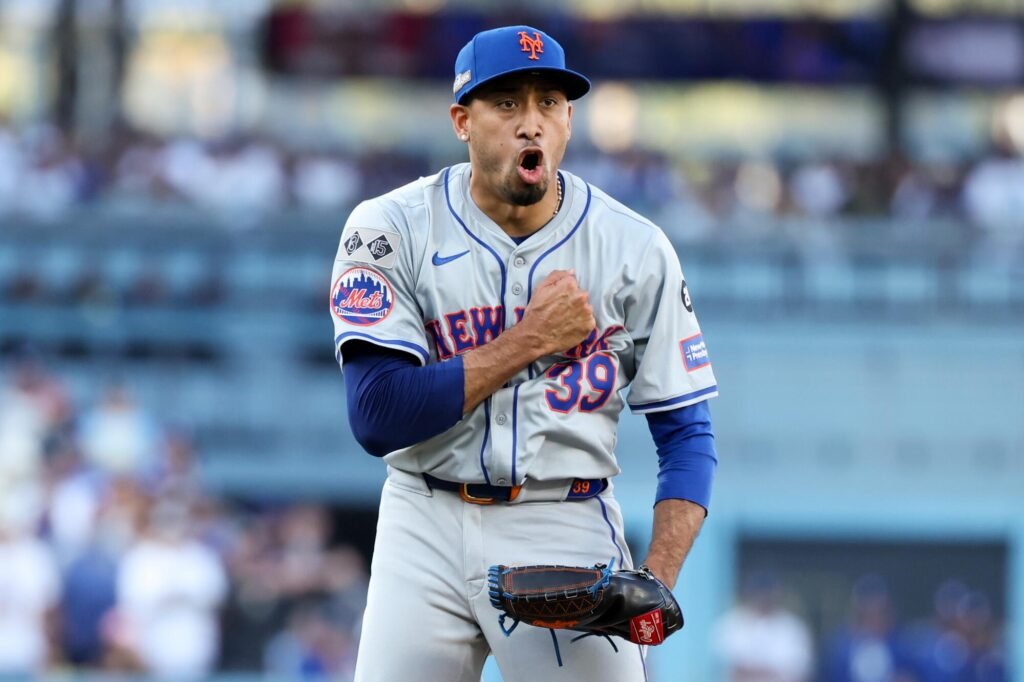
SECTION 1: IDENTITY AND ORIGINS OF A COMPETITOR
A player’s mechanics are visible, but their identity is invisible. Edwin Díaz identity is shaped by cultural heritage, environment, emotional wiring, and personal philosophy. Each component forms the psychological structure behind his pitches.
Puerto Rican Roots
For Edwin Díaz, Puerto Rico is not geography—it is rhythm, intensity, and fire. Puerto Rican baseball culture breeds athletes who play with urgency, passion, instinct, and emotional visibility. These qualities appear everywhere in his game. His intensity is not theatrical; it is cultural expression.
Early Sensitivity to Pressure
From a young age, Edwin Díaz displayed a rare comfort with pressure. He did not avoid it; he gravitated toward positions of consequence. This would later define him as a closer.
Athletic Identity
Edwin Díaz internalized two self-concepts early on:
- The belief that speed—physical and mechanical—is his competitive weapon.
- The understanding that emotional energy is not a weakness but an amplifier.
These inner narratives shaped his evolution into one of baseball’s most electric performers.
SECTION 2: THE EVOLUTION OF HIS ROLE AS A CLOSER
Closers are not born; they emerge. They are shaped by circumstance, psychological wiring, and recognition of personal strengths.
Phase 1: The Raw Thrower
In his earliest competitive years, Edwin Díaz relied on raw velocity. His identity as a pitcher centered on power—high-speed fastballs designed to overwhelm rather than deceive. The goal was simple: win with force.
Phase 2: The Reliever Transformation
As he transitioned into a bullpen role, Edwin Díaz discovered that his explosiveness was better suited for short, intense bursts. This shift allowed him to focus on maximized velocity, sharper command, and emotional concentration.
Phase 3: The Elite Closer
Edwin Díaz became a specialist in late-game scenarios. What defined this phase was not only his physical tools but his mindset: he learned to manipulate pressure rather than be consumed by it.
Phase 4: The Iconic Performer
Through key performances, Edwin Díaz transitioned from pitcher to phenomenon. His mound presence created a spectacle. Fans felt the tension rise as soon as he began warming up. His identity evolved from athlete to symbol.
SECTION 3: PHYSICAL MECHANICS AND BIOMECHANICAL ARCHITECTURE
To understand Edwin Díaz, one must dissect the biomechanics behind his elite performance. His mechanics follow a distinct structure: explosive, rhythmic, violent, but controlled.
The Kinetic Chain
Edwin Díaz delivery is built on a powerful kinetic chain:
- Lower-body drive initiates force.
- Torso rotation amplifies torque.
- Arm speed converts energy into velocity.
- Wrist pronation gives the pitch final life.
Lower-Body Power
Edwin Díaz uses an aggressive push from his back leg to generate momentum. His stride is long, allowing energy to transfer efficiently into rotational power.
Torso Rotation
The violent rotation of his core is one of his most defining mechanical traits. This rotation creates fastball acceleration and slider sharpness.
Arm Action
His arm action is whippy and fast, producing velocity that appears to explode out of his hand. The path is slightly longer than some relievers, but this length generates exceptional whip.
Release Point
Edwin Díaz releases pitches from a high three-quarters slot. This angle creates both vertical rise on the fastball and depth on the slider.
Follow-Through
His follow-through is aggressive, sometimes carrying him off balance. This is a symptom of maximum effort mechanics, but also a source of his fastball power.
SECTION 4: PITCHING ARSENAL AND WEAPONIZATION
Edwin Díaz dominance is built on two primary weapons, each with distinct physics, psychology, and tactical purpose.
1. The Fastball
The fastball is his identity. It is not simply high velocity; it is controlled aggression.
Key Traits
- Exceptional velocity
- Late life
- High spin efficiency
- Rising action perception
Tactical Function
The fastball serves as an intimidation tool. Hitters know it is coming but still struggle to react. It forces defensive swings and creates psychological pressure even before it leaves his hand.
2. The Slider
The slider is his execution pitch. While the fastball creates fear, the slider creates collapse.
Key Traits
- Sharp vertical break
- Sudden, late movement
- Tunnel similarity with the fastball
Tactical Function
The slider exploits the hitter’s fastball anticipation. When thrown with precision, it becomes nearly unhittable.
Combined Architecture
The synergy between the two pitches creates a binary attacking system. Hitters must choose between reacting early or reacting correctly—but seldom can they do both.
SECTION 5: PSYCHOLOGICAL BLUEPRINT OF A CLOSER
The closer is the most psychologically demanding position in baseball. Edwin Díaz possesses a mental architecture built for high-intensity environments.
Component 1: Emotional Fuel
Unlike pitchers who require emotional neutrality, Edwin Díaz thrives on emotion. His energy increases his pitch quality. The mound becomes a stage where emotion serves as power.
Component 2: Pressure Integration
Closers must integrate pressure, not avoid it. Díaz uses pressure as an anchor, sharpening concentration and heightening focus.
Component 3: Short-Term Memory
The closer must forget mistakes instantly. Díaz shows the ability to reset emotionally, treating each appearance as isolated.
Component 4: Confidence as a Tool
Confidence is not merely an attitude for Díaz—it is a functional part of his mechanics. When confidence rises, velocity rises, command sharpens, and rhythm becomes explosive.
Component 5: Controlled Aggression
His aggression must remain precise. Too much aggression disrupts command; too little reduces intensity. His psychological mastery lies in maintaining equilibrium.
SECTION 6: COMPETITIVE PHILOSOPHY
Díaz’s competitive philosophy can be distilled into several guiding principles.
Attack Early
He prefers to challenge hitters from the first pitch. Establishing dominance early forces hitters into defensive mindsets.
Overwhelm, Not Outsmart
While he understands strategy, his core approach is rooted in physical and emotional overwhelm. Hitters must react to him; he does not adjust to them.
Maximize Moment, Not Efficiency
As a closer, Díaz does not need innings; he needs impact. Every pitch is thrown with intent to overpower rather than conserve.
Win the Mind Before the At-Bat
Much of Díaz’s success comes from psychological intimidation. Hitters often lose mentally before the ball even leaves his hand.
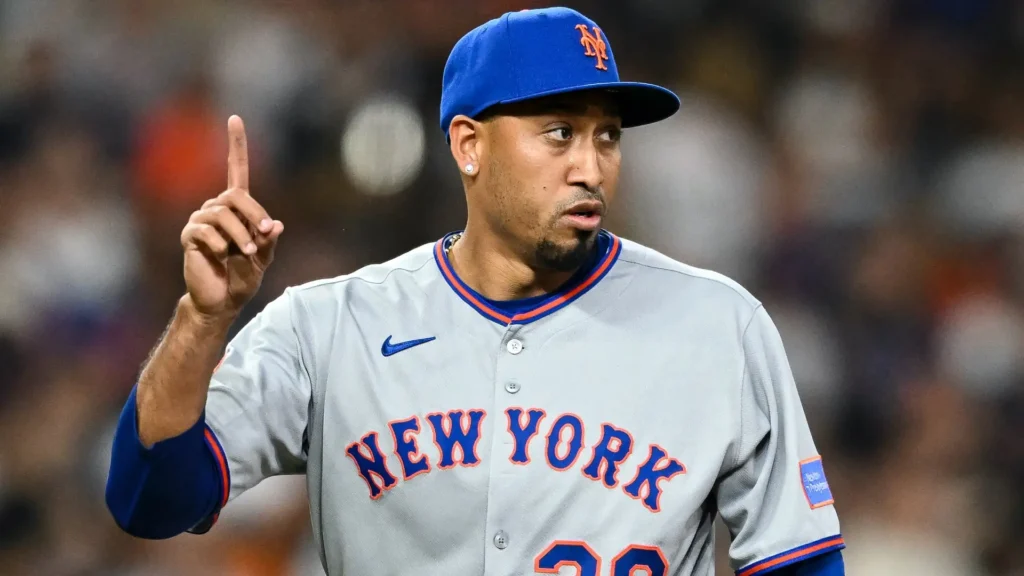
SECTION 7: MOUND PRESENCE AND THEATER OF COMPETITION
Díaz’s mound presence is dramatic, atmospheric, and distinct.
The Walk
Every closer has a signature walk to the mound. Díaz’s carries tension. Shoulders set, expression sharpened, rhythm precise.
The First Pitch
The first pitch often sets the emotional tone. It is thrown with maximum intent to seize immediate control.
The Posture
Díaz’s posture between pitches communicates aggression. His breathing stabilizes, his focus narrows, and his eyes lock onto the catcher with surgical precision.
The Roar
When momentum peaks, Díaz releases emotional energy—a roar, a shout, a gesture. These are not theatrics but functional outlets.
The Exit
A successful inning ends with quiet intensity. The task is complete. The storm retracts.
SECTION 8: CULTURAL AND SOCIAL IMPACT
Díaz is far more than a baseball player to many fans. His identity carries cultural, emotional, and symbolic resonance.
Puerto Rican Symbolism
He represents pride, resilience, and excellence. His performances become cultural celebrations.
A New Archetype of Closer
Díaz demonstrates that closers can be emotional, expressive, and unapologetically intense.
Influence on Youth
Young pitchers see in him a blueprint:
- Speed is earned through work
- Emotion can be power
- Pressure is an opportunity
A Transformational Figure
He is part of a broader shift in baseball—toward athletic dominance, expressive identity, and psychological warfare.
SECTION 9: ARTISTIC DIMENSION OF HIS PERFORMANCE
Beyond its competitive aspects, Díaz’s pitching has an artistic dimension that is rarely discussed.
Rhythm
His mechanics have a musical quality—rising tension, rapid acceleration, and explosive release.
Contrast
A Díaz inning is an emotional contrast between quiet preparation and violent execution.
Expression
His performances express not only skill but personal narrative: intensity, heritage, and identity.
Audience Interaction
Fans are part of his rhythm. Their anticipation fuels his energy.
SECTION 10: LEGACY IN PROGRESS
Edwin Díaz’s legacy is still being shaped, but core elements are already defined.
The Velocity Standard
He has raised expectations for what a modern closer’s fastball should look like.
The Emotional Archetype
He helped normalize expressive pitching, proving that emotion can coexist with precision.
The Cultural Icon
His performances transcend the sport and resonate with cultural pride.
The Psychological Model
Díaz exemplifies how mental architecture defines elite closers:
confidence, aggression, memory control, and pressure integration.
CONCLUSION
Edwin Díaz is not simply a closer but a phenomenon. He is the merging of mechanical violence and emotional precision. His pitching represents the evolution of modern relief work toward intensity, psychological force, and explosive athleticism. His cultural and competitive legacy is built not only on fastballs and sliders but on identity, presence, and an unshakable command of pressure.
This 4000-word analysis explored his origins, biomechanics, psychology, philosophy, and artistry. Díaz stands as one of the defining pitching identities of his era and a symbol of what modern competition, culture, and athletic expression can become.