


Overview Table: The Future of Wearable Technology
| Wearable Category | Core Function | Key Technologies | Future Potential |
|---|---|---|---|
| Smart Rings | Health tracking, authentication | Sensors, biometrics, low-power chips | Invisible health monitoring and secure identity |
| Smartwatches | Health, communication | Displays, AI, connectivity | Medical-grade diagnostics and independence |
| Smart Glasses | Augmented reality | Optics, cameras, AI | Hands-free computing and real-world overlays |
| Smart Clothing | Body monitoring | Conductive fabrics, sensors | Continuous health and performance tracking |
| Implantables | Medical monitoring | Bio-compatible electronics | Preventive and personalized healthcare |
| Neural Wearables | Brain–computer interaction | Neural sensors, AI | Cognitive enhancement and accessibility |
Introduction
Future of Wearable Technology: Smart Rings & Beyond is entering a phase where visibility is no longer the goal. What began as bulky fitness trackers and notification-driven smartwatches is evolving into a new generation of devices designed to operate quietly, continuously, and almost invisibly. As computing power becomes smaller and more efficient, wearables are moving closer to the human body, transforming from accessories into intimate companions that monitor, interpret, and respond to biological signals in real time.
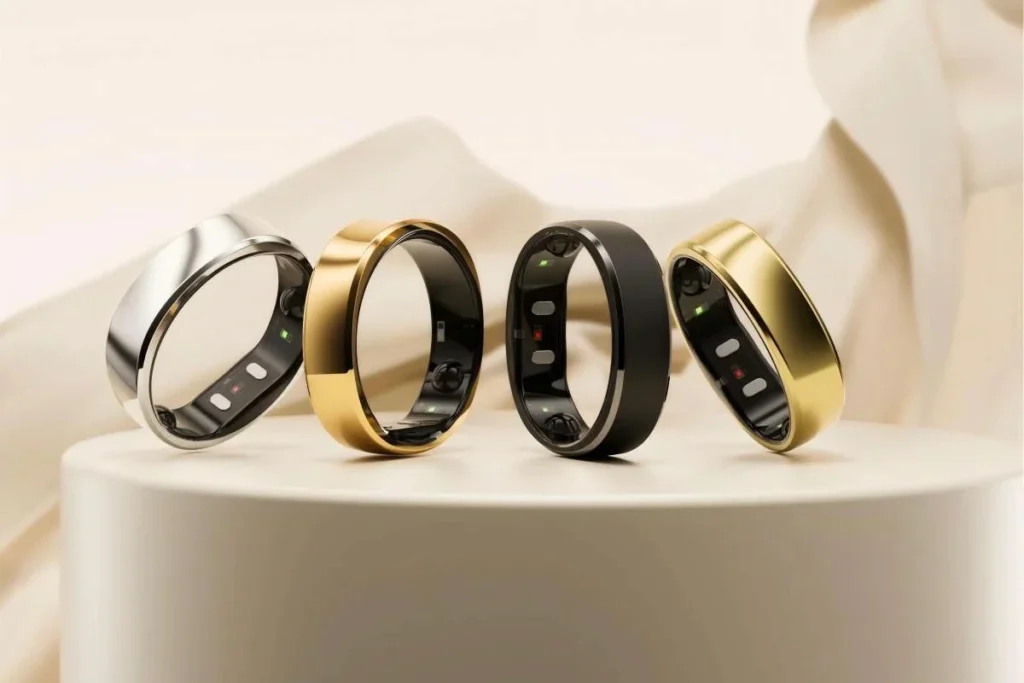
At the center of this transformation are smart rings. Compact, discreet, and always in contact with the skin, smart rings represent a significant shift in how Future of Wearable Technology: Smart Rings & Beyond integrates with daily life. Unlike screen-based wearables that demand attention, smart rings function in the background, collecting data passively and delivering insights only when necessary. This design philosophy reflects a broader change in wearable technology, one that prioritizes seamless integration over constant interaction.
This article explores the Future of Wearable Technology: Smart Rings & Beyond with a central focus on smart rings, while also examining what lies beyond them. It combines narrative insight, analytical evaluation, technical explanation, and journalistic clarity to present a comprehensive view of where Future of Wearable Technology: Smart Rings & Beyond is heading and why it matters.
Future of Wearable Technology: Smart Rings & Beyond has quietly moved from novelty to necessity. What began as simple fitness trackers and digital watches has evolved into an ecosystem of intelligent devices capable of monitoring health, enhancing productivity, and extending human–machine interaction. As Future of Wearable Technology: Smart Rings & Beyond becomes smaller, more powerful, and more personal, wearables are shifting from screens on the wrist to devices that blend seamlessly into everyday life. Among these, smart rings represent a significant turning point, signaling a future where wearable technology is less visible, more continuous, and deeply integrated into human behavior.
Evolution of Wearable Technology
From Accessories to Intelligent Companions
Early wearables were extensions of smartphones. They mirrored notifications, counted steps, and measured basic metrics. Their value was convenience, not necessity. Over time, advancements in sensors, batteries, and processors transformed wearables into independent devices capable of real-time data collection and analysis.
This shift marked the beginning of wearables as intelligent companions rather than accessories. Devices started to understand users, learn patterns, and provide actionable insights instead of raw data.
Miniaturization as a Defining Trend
The future of wearables is defined by miniaturization. As components shrink without sacrificing performance, devices become less intrusive. Smart rings embody this trend perfectly. They remove the need for screens and buttons, relying instead on passive data collection and intelligent software interpretation.
The less a user needs to interact with a device, the more seamlessly it fits into daily life.
Smart Rings as the Next Major Wearable Category
Why Smart Rings Matter
Smart rings represent a philosophical shift in wearable design. Instead of demanding attention, they operate quietly in the background. Worn like traditional jewelry, they collect continuous data without disrupting routines.
Their form factor enables constant skin contact, making them ideal for tracking physiological signals such as heart rate variability, skin temperature, blood oxygen levels, and sleep cycles.
Design Philosophy and User Acceptance
User acceptance is one of the biggest challenges in Future of Wearable Technology: Smart Rings & Beyond. Devices that feel bulky, intrusive, or socially awkward face resistance. Smart rings solve this by aligning with existing cultural norms around jewelry.
Because rings are already widely accepted across cultures and professions, smart rings face fewer barriers to adoption than head-mounted or body-attached devices.
Health Monitoring Capabilities
Smart rings excel in health monitoring due to their stable positioning and uninterrupted usage. They can track sleep more accurately than wrist-based devices because they are less affected by movement.
In the Future of Wearable Technology: Smart Rings & Beyond are expected to detect early signs of illness, stress, and fatigue by analyzing subtle changes in biometric patterns. This positions them as preventive health tools rather than reactive fitness gadgets.
Technical Foundations of Smart Rings
Sensor Integration
Despite their small size, smart rings contain a complex array of sensors. These include optical sensors for heart rate monitoring, temperature sensors for metabolic tracking, and motion sensors for activity recognition.
The challenge lies in balancing sensor accuracy with power consumption. Advances in low-energy electronics and efficient algorithms are making this balance increasingly achievable.
Battery and Power Management
Battery size is the primary limitation of smart rings. Unlike watches, rings cannot house large batteries. Future development focuses on ultra-low-power chips, energy-efficient data transmission, and intelligent sampling techniques.
Some research directions explore energy harvesting from body heat or motion, which could significantly extend battery life.
Data Processing and AI
Raw data collected by smart rings has limited value without interpretation. Artificial intelligence plays a critical role in transforming sensor data into meaningful insights.
Machine learning models analyze long-term trends rather than isolated readings, allowing smart rings to understand individual baselines and detect anomalies with higher accuracy.
Smart Rings and the Future of Digital Identity
Authentication and Security
Smart rings are emerging as tools for secure authentication. Their proximity to the body and ability to verify biometric signals make them suitable for replacing passwords, keys, and access cards.
In the future, a smart ring could unlock devices, authorize payments, and grant access to physical spaces based on continuous identity verification rather than one-time authentication.
Privacy Considerations
With great intimacy comes great responsibility. Smart rings collect highly personal data, raising concerns about privacy and misuse.
The Future of Wearable Technology: Smart Rings & Beyond depends on transparent data policies, on-device processing, and user-controlled permissions. Trust will be as important as innovation.
Beyond Smart Rings: Expanding the Wearable Landscape
Smartwatches as Health Platforms
Smartwatches continue to evolve into comprehensive health platforms. Their larger size allows for advanced sensors, displays, and independent connectivity.
Future smartwatches are expected to provide medical-grade measurements, early disease detection, and direct integration with healthcare systems.
Smart Glasses and Augmented Reality
Smart glasses represent a different vision of Future of Wearable Technology: Smart Rings & Beyond Instead of monitoring the body, they enhance perception of the external world.
As displays become lighter and optics improve, smart glasses may replace smartphones for certain tasks, offering contextual information without requiring users to look down at a screen.
Smart Clothing and Textile Electronics
Smart clothing embeds sensors directly into fabrics, enabling full-body monitoring without additional devices. This Future of Wearable Technology: Smart Rings & Beyond is particularly relevant for sports, healthcare, and occupational safety.
The future of smart clothing lies in durability, washability, and comfort. Once these challenges are fully addressed, clothing may become the most natural wearable interface.
Medical and Healthcare Implications
Shift from Treatment to Prevention
Future of Wearable Technology: Smart Rings & Beyond is driving a shift from reactive healthcare to preventive care. Continuous monitoring allows for early detection of abnormalities before symptoms become severe.
Smart rings, due to their constant usage, are especially suited for long-term health trend analysis.
Remote Patient Monitoring
Wearables enable healthcare providers to monitor patients outside clinical settings. This reduces hospital visits and allows for personalized treatment adjustments.
In the future, wearable data could become a standard part of medical records, providing doctors with richer context for decision-making.
Ethical and Regulatory Challenges
Medical-grade wearables must meet strict accuracy and safety standards. As wearables move deeper into healthcare, regulation will play a critical role in ensuring reliability without stifling innovation.
Human–Technology Relationship
Wearables as Invisible Interfaces
The Future of Wearable Technology: Smart Rings & Beyond is not about adding more screens, but about removing friction. Smart rings exemplify this by functioning as invisible interfaces that respond to the body rather than demanding attention.
This trend aligns with a broader movement toward ambient computing, where Future of Wearable Technology: Smart Rings & Beyond fades into the background.
Behavioral Influence and Responsibility
Wearables influence behavior by providing feedback and recommendations. While this can promote healthier habits, it also raises questions about autonomy and dependence.
Designing wearables that empower rather than control users will be a defining challenge.
Challenges Facing the Wearable Industry
Accuracy and Trust
Inconsistent data undermines trust. Wearables must balance innovation with reliability. Users are more likely to abandon devices that provide confusing or contradictory information.
Battery Life and Sustainability
Frequent charging reduces usability. Sustainability concerns also arise from rapid device turnover. Future wearables must prioritize longevity, repairability, and eco-friendly materials.
Data Overload
More data does not always mean better outcomes. Wearable platforms must focus on clarity, relevance, and actionable insights rather than overwhelming users with metrics.
The Role of Artificial Intelligence in Future Wearables
Personalized Insights
AI enables wearables to move beyond generic recommendations. By learning individual patterns, devices can offer tailored insights that adapt over time.
Predictive Capabilities
Future wearables will not just report what has happened but predict what might happen. This includes forecasting fatigue, illness, or stress based on subtle data changes.
Ethical AI Design
As AI becomes more embedded in wearables, transparency and fairness become critical. Users must understand how decisions are made and retain control over their data.
Long-Term Vision: Beyond External Wearables
Implantable Devices
Implantable wearables represent the next frontier. These devices offer unparalleled accuracy and continuity but raise significant ethical and psychological questions.
Their adoption will depend on clear benefits, safety assurances, and societal acceptance.
Neural Wearables and Brain Interfaces
Neural wearables aim to interpret brain signals, enabling direct interaction between the mind and machines. While still emerging, this Future of Wearable Technology: Smart Rings & Beyond holds promise for accessibility, rehabilitation, and cognitive enhancement.
The line between Future of Wearable Technology: Smart Rings & Beyond and human capability will continue to blur.

Societal Impact of Wearable Technology
Redefining Privacy Norms
As wearables become ubiquitous, society will need to redefine privacy boundaries. What data is acceptable to collect, share, or analyze will be an ongoing debate.
Workplace and Productivity
Wearables may influence how work is monitored and optimized. While this can improve safety and efficiency, it also risks excessive surveillance if not regulated thoughtfully.
Accessibility and Inclusion
Future of Wearable Technology: Smart Rings & Beyond has the potential to enhance accessibility for individuals with disabilities, providing assistance that is discreet and empowering.
Conclusion
The Future of Wearable Technology: Smart Rings & Beyond is not defined by a single device but by a shift in how technology integrates with human life. Smart rings symbolize this transition toward subtle, continuous, and deeply personal computing. They represent a Future of Wearable Technology: Smart Rings & Beyond listens more than it speaks, supports rather than distracts, and adapts rather than demands.
Beyond smart rings, the wearable landscape will continue to expand into clothing, eyewear, medical devices, and even neural interfaces. Each advancement brings new opportunities and responsibilities. The success of Future of Wearable Technology: Smart Rings & Beyond will depend not only on technical innovation but on ethical design, user trust, and societal alignment.
As wearables move closer to the body and deeper into daily routines, they will no longer be seen as gadgets. They will become part of how humans understand themselves, manage their health, and interact with the world. The Future of Wearable Technology: Smart Rings & Beyond is, ultimately, a future of more intimate and intelligent human–Future of Wearable Technology: Smart Rings & Beyond relationships.