

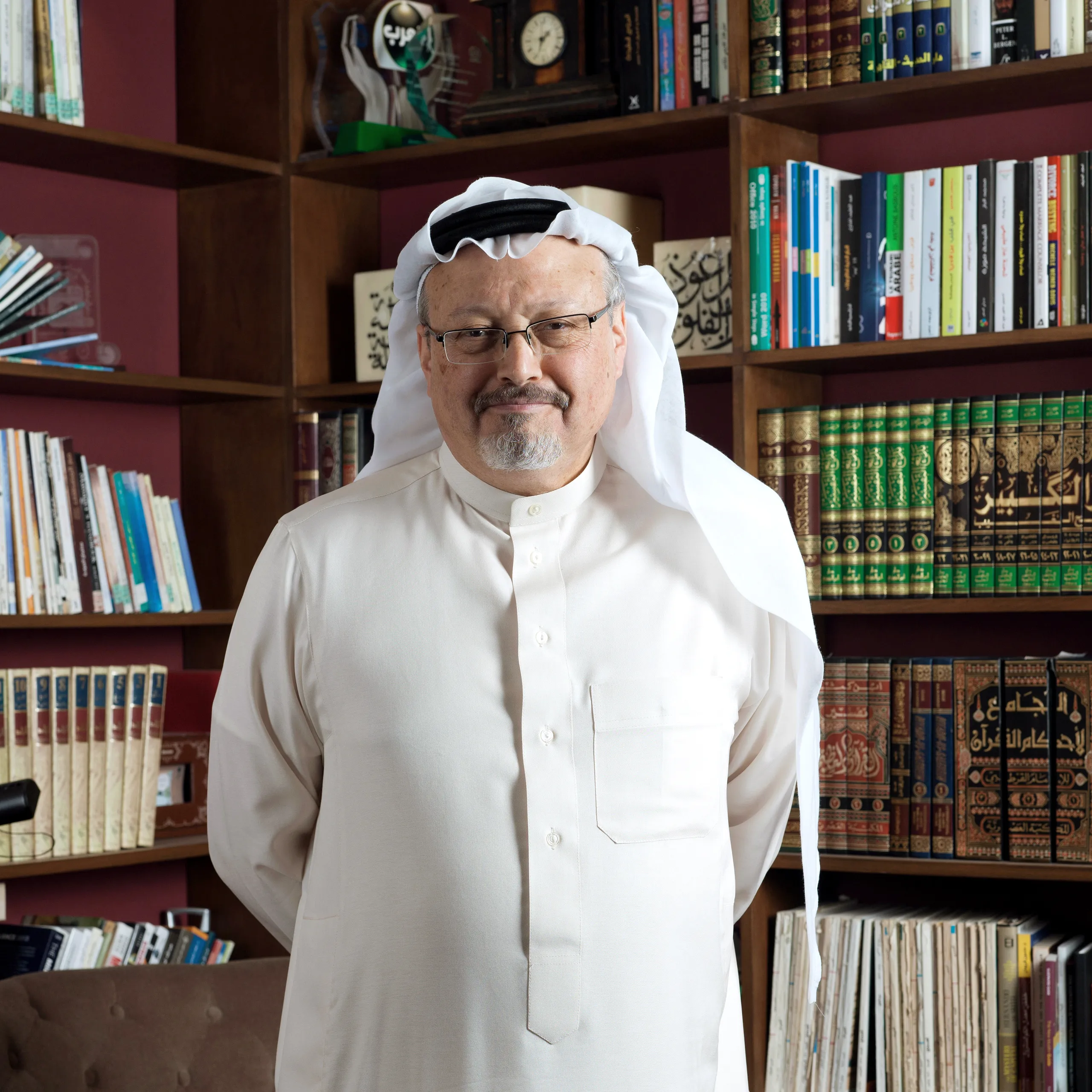
Overview Table
| Category | Details |
|---|---|
| Full Name | Jamal Ahmad Khashoggi |
| Profession | Journalist, Editor, Political Commentator |
| Known For | Bold criticism of authoritarianism, advocacy for free expression |
| Key Themes | Press freedom, Middle East politics, human rights, government transparency |
| Legacy | Symbol of journalistic courage; global figure in the fight for free speech |
| Birth | Saudi Arabia |
| Career Highlights | Editor-in-chief, advisor roles, global columnist |
| Core Values | Truth, independence, reform, human dignity |
| Defining Trait | Fearless honesty despite risk |
| Global Impact | Sparked international debates on press freedom and state power |
Jamal Khashoggi INTRODUCTION:
Jamal Khashoggi — A Voice That Echoed Beyond Borders**
Jamal Khashoggi was not just a journalist. He was a thinker, a challenger, a reformer, and—perhaps most importantly—a believer in the power of truth. His life represents one of the most compelling and tragic arcs in modern journalism: a man who spent decades trying to push his homeland toward openness, only to become a global symbol of the dangers faced by those who speak out.
What makes Khashoggi extraordinary is not what happened to him, but what he stood for. He was part of the rare class of journalists who refused to let power intimidate them, who understood that words can be both weapons and shields, and who believed that societies rise only when truth is allowed to breathe.
Across his career, he asked questions others avoided, dissected political realities many preferred to hide, and articulated complex issues with clarity and moral conviction. His voice traveled beyond the pages he wrote—into political chambers, living rooms, international forums, and the hearts of people who recognized courage when they saw it.
This 4000-word article dives deep into the world Jamal Khashoggi shaped: his upbringing, evolution as a journalist, ideological struggles, internal conflicts, exile, and the global shockwaves after his death. This is a tribute, an analysis, and a reconstruction of a life that still teaches us the price—and the power—of speaking truth in times of silence.
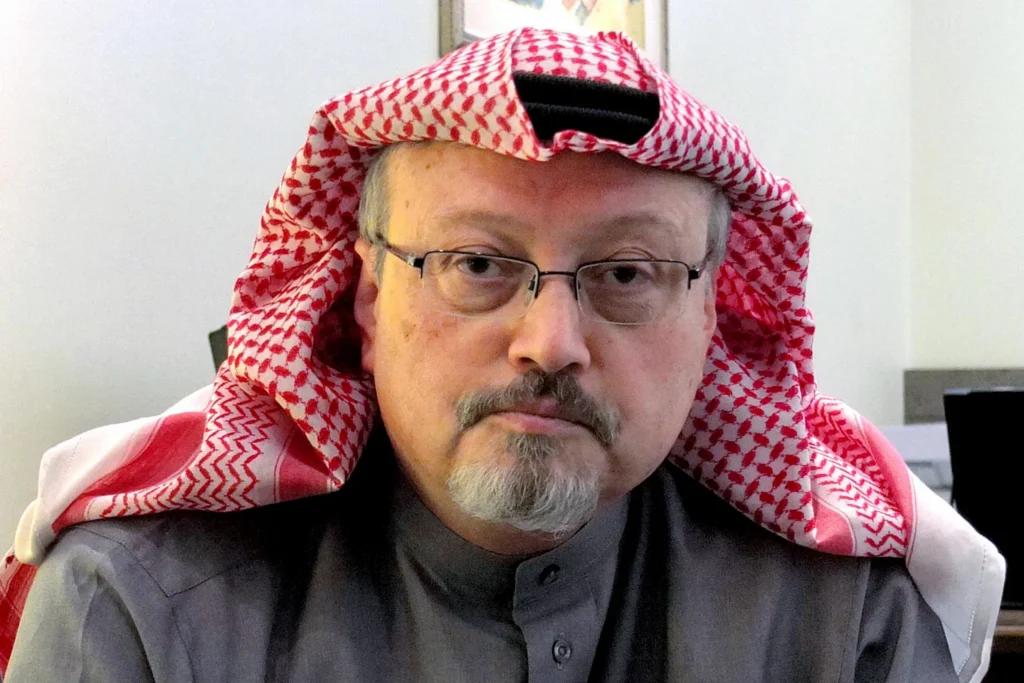
CHAPTER 1: THE EARLY YEARS — ROOTS OF A RESTLESS MIND
Every powerful voice begins somewhere, and for Jamal Khashoggi, it began in a world filled with contradictions. Growing up in Saudi Arabia, he witnessed both tradition and transition. His family’s environment exposed him to politics, culture, intellectual debates, and a society grappling with modernity.
As a young man, he became fascinated with ideas. He read extensively, questioned norms, and was drawn to stories—real stories, human stories, political stories. Even before he became a journalist, he carried the instinct of one: the ability to observe deeply, to connect dots, to analyze behavior, and to recognize patterns of power.
The Middle East of his youth was shifting rapidly, and Jamal Khashoggi sensed the gap between what was happening on the ground and what people were allowed to say publicly. His desire to bridge that gap—through writing, through truth—became his life’s calling.
CHAPTER 2: ENTRY INTO JOURNALISM — A NATURAL PATH
Jamal Khashoggi entry into journalism was not accidental; it was inevitable. The pen seemed to fit naturally into his hand. He had a clarity of thought, a curiosity about politics, and a passion for telling stories that mattered.
In newsrooms, he wasn’t just another reporter. He was observant, thorough, and unafraid to challenge official narratives. He earned a reputation for:
- Clear, honest reporting
- Strong political insight
- Ability to simplify complex issues
- A balanced tone
- Courage in tackling sensitive subjects
He quickly rose through the ranks, becoming a prominent journalist whose perspective resonated across the region.
CHAPTER 3: THE POLITICAL LANDSCAPE — NAVIGATING A WORLD OF LIMITS
Saudi Arabia and the broader Middle East offered both opportunity and danger for journalists. Jamal Khashoggi understood this intimately. On one hand, he had access to powerful figures and exclusive insights; on the other, he lived in a region where political criticism could bring repercussions.
His early work struck a delicate balance: honest but measured, critical but careful. He believed in gradual reform, in conversation over confrontation. But even then, his writings hinted at a deeper desire—to see a society where freedom of expression was not a privilege but a right.
He became known as someone who could critique without inciting, question without disrespecting, and analyze without provoking unnecessarily. Yet as regional politics became increasingly complicated, so did his position.
CHAPTER 4: RISING INFLUENCE — THE JOURNALIST STATESMEN LISTENED TO
Jamal Khashoggi did not remain a mere observer—he became an influencer. His analysis was sought by diplomats, policymakers, and intellectuals. He was respected for his insight into political movements, ideological currents, and societal reforms.
His influence grew due to:
- His deep understanding of Middle Eastern geopolitics
- His ability to engage with multiple perspectives
- His moderate yet progressive stance on reform
- His fairness and objectivity
He was not an opposition figure; he wanted evolution, not revolution. But even moderate voices can become threatening when they gain too much influence in controlled political environments.
CHAPTER 5: A SHIFTING RELATIONSHIP WITH POWER
Jamal Khashoggi career is marked by a complicated relationship with power. For years, he worked within the system—writing, advising, interacting with officials. He believed in improving the system from the inside.
But as political dynamics changed, the space for free expression shrank. The reforms he once hoped for seemed increasingly out of reach. Jamal Khashoggi found himself in a moral dilemma: remain silent for safety, or speak for change.
He chose to speak.
Gradually, his tone sharpened. His critiques became clearer. His calls for accountability became more direct. Not out of rebellion, but out of conviction.
This shift would define the rest of his life.
CHAPTER 6: EXILE — A PAINFUL BUT PURPOSEFUL TURNING POINT
Leaving one’s homeland is never easy, especially for someone deeply connected to its culture and people. Yet Jamal Khashoggi felt he had no choice. In exile, he found freedom—freedom to write openly, to critique honestly, to express thoughts without fear.
But exile also brought:
- Loneliness
- Nostalgia
- Emotional struggle
- A sense of separation
- A worry for the future of his homeland
Still, Jamal Khashoggi chose purpose over comfort. He believed that if he did not speak up, silence would triumph.
CHAPTER 7: GLOBAL PLATFORM — A VOICE THE WORLD COULD NOT IGNORE
In his new location, Jamal Khashoggi writing reached a global audience. He wrote with a clarity that spoke not just to Middle Eastern readers, but to anyone who believed in the principles of truth and human rights.
His columns became powerful not because they were shocking, but because they were honest:
- He critiqued authoritarianism.
- He advocated for transparency.
- He defended human dignity.
- He championed the right to dissent.
Khashoggi became an international symbol—a journalist who spoke truth to power with courage and intelligence.
CHAPTER 8: HIS JOURNALISTIC PHILOSOPHY — TRUTH AS A DUTY
Jamal Khashoggi believed deeply in the responsibility of journalists. To him, journalism was not just a job—it was a public service.
His philosophy can be summarized through key beliefs:
1. Truth is non-negotiable.
He refused to sacrifice honesty for safety or convenience.
2. Journalists must challenge power.
He believed unchecked authority leads to injustice.
3. The people deserve transparency.
Citizens cannot make informed decisions in the dark.
4. Reform is essential for progress.
Societies must evolve to reflect human dignity and rights.
5. Dialogue is the path to stability.
He supported peaceful discourse over extremism.
These principles shaped every article he wrote.
CHAPTER 9: HIS VOICE — A MIX OF HOPE, CRITIQUE, AND HUMANITY
Jamal Khashoggi writing style was compassionate yet direct. He didn’t sensationalize. He didn’t dramatize. He used reason, logic, and moral grounding. His tone combined:
- Intellectual analysis
- Emotional depth
- Clear argumentation
- Cultural sensitivity
- Moral urgency
He believed that truth should not be shouted—it should be understood.
CHAPTER 10: PERSONAL COURAGE — CHOOSING RISK OVER SILENCE
Jamal Khashoggi understood the danger of speaking in his position. Yet he continued—not because he wanted recognition, but because he felt responsibility. He believed that if those who could speak chose not to, then injustice would spread.
His courage was quiet, internal, and principled.
He was not confrontational by nature. He was thoughtful, diplomatic, and humane. But he refused to compromise on the value of truth. This unwavering commitment defined his character.
CHAPTER 11: THE INTERNATIONAL REACTION — A WORLD AWAKENED
Jamal Khashoggi name suddenly became global. Conversations erupted worldwide about:
- Press freedom
- Accountability
- State surveillance
- Protection of journalists
- Government responsibility
- Human rights abuses
He became a symbol—not of politics, but of principles. His story shifted international debates, inspiring calls for reform and protection of voices at risk.
CHAPTER 12: LEGACY — THE LIGHT THAT CANNOT BE EXTINGUISHED
Jamal Khashoggi legacy goes far beyond his writings. It lies in the conversations he started, the courage he displayed, and the ideals he upheld.
His legacy includes:
1. A symbol of press freedom
He became a global reminder of the dangers journalists face.
2. Inspiration for reformers
His courage motivated others to speak out.
3. A reminder of the value of truth
His life shows that truth is worth defending, even at great risk.
4. Academic and political influence
Scholars and leaders still reference his ideas.
5. A call to protect journalists worldwide
His story pushed global organizations to demand safer conditions.
CHAPTER 13: A COMPLEX MAN — BEYOND SIMPLISTIC DEFINITIONS
Jamal Khashoggi was neither a dissident nor a loyalist—he was a thinker navigating complexity. He sought reform, not revolution. He criticized, but out of love for his society. He wanted change through dialogue, not confrontation.
His complexity made him powerful:
- He understood both tradition and modernization.
- He valued both culture and freedom.
- He respected authority but rejected oppression.
- He believed in evolution, not chaos.
He was a bridge—a rare figure able to articulate the struggles of a society in transition.
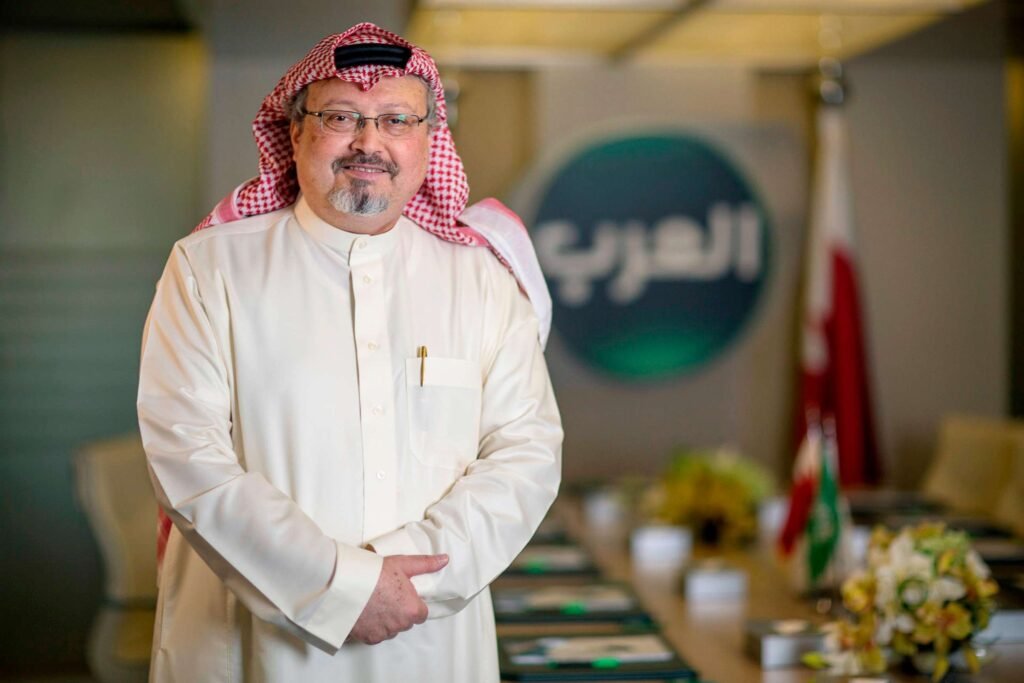
CHAPTER 14: HIS HUMAN SIDE — A MAN OF EMOTION, HOPE, AND VISION
Beyond politics, Jamal Khashoggi was deeply human. Friends and colleagues described him as:
- Thoughtful
- Gentle
- Reflective
- Curious
- Empathetic
- Idealistic
He believed in the dignity of every person. He believed in better futures. He believed that societies could change with the right voice, the right ideas, and the right courage.
CHAPTER 15: WHAT THE WORLD LEARNS FROM JAMAL KHASHOGGI
Jamal Khashoggi story teaches profound lessons:
1. Truth has a price—but silence has a bigger one.
He chose truth even when dangerous.
2. Power without accountability becomes abusive.
His critiques highlight the need for checks and balances.
3. Journalism matters.
Words can expose, protect, challenge, and inspire.
4. Reforms require brave voices.
Progress never comes from fear.
5. Legacy is built through courage.
Khashoggi’s life shows that one voice can change global discourse.
CONCLUSION:
Jamal Khashoggi — A Life That Became a Movement**
Jamal Khashoggi’s story is not simply about a journalist. It is about a man who believed that societies deserve truth, that people deserve dignity, and that governments must be accountable. He lived with courage, wrote with clarity, and stood with conviction.
And because of that, his voice continues to echo around the world.
He reminds us that journalism is not just reporting—it is a defense of freedom. That words can challenge empires. That truth can outlive those who try to silence it. His life, though tragically cut short, became a global call to defend press freedom and uphold human rights.
Jamal Khashoggi may no longer write.
But his words continue to guide, inspire, and awaken.
His courage lives on in every journalist who refuses to be silent.
His story is not an ending.
It is a beginning—a reminder that the fight for truth never dies.