

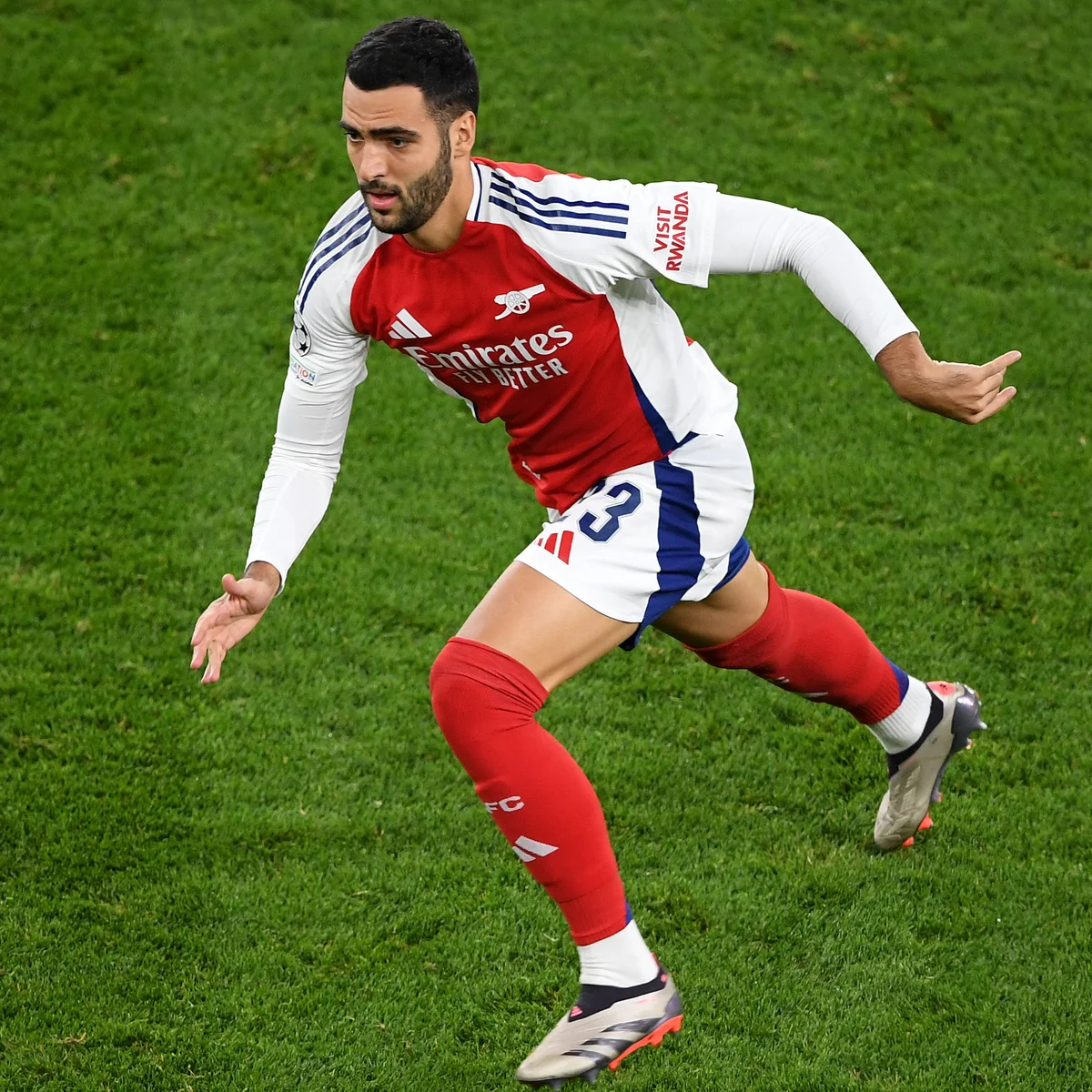
Overview Table
| Category | Details |
|---|---|
| Full Name | Mikel Merino Zazón |
| Nationality | Spanish |
| Playing Role | Central midfielder / Defensive midfielder |
| Known For | Positional intelligence, aerial strength, tactical awareness, two-way midfield contribution |
| Foot | Left-footed |
| Key Strengths | Game reading, progressive passing, ball-winning, aerial dominance, distribution under pressure, spatial control |
| Key Weaknesses | Occasional overcommitment in duels, limited top-end speed, high physical workload |
| Club Identity | Real Sociedad (core leader), previous experience in Dortmund and England |
| International Identity | Reliable Spain midfielder with tactical maturity |
| Signature Traits | Commanding presence, late box runs, precise long balls, intelligent pressing, calm decision-making |
| Article Sections | Early life, Athletic formation, Style evolution, Tactical breakdown, Leadership traits, Big-match mentality, Strengths, Weaknesses, Influence on modern Spanish midfield, Long-term legacy |
Mikel Merino: Introduction
Mikel Merino represents a rare footballing archetype: a midfielder who blends the traditional Spanish foundations of technical precision and positional mastery with the physical assertiveness and aerial dominance more commonly associated with northern European football. The result is a complete, modern, two-way midfielder capable of dictating tempo, disrupting opponents, and elevating the collective intelligence of his team. His evolution from a young Spanish prospect into one of Europe’s most reliable midfield anchors is a story of adaptability, learning curves, mental strength, and a profound understanding of what it means to control a match.
This article examines Merino’s full identity as a footballer and leader. It explores his upbringing, his tactical education, his multidimensional skill set, his club and international contributions, his strengths and weaknesses, and the deeper significance of his career in the context of modern football’s evolving midfield demands.
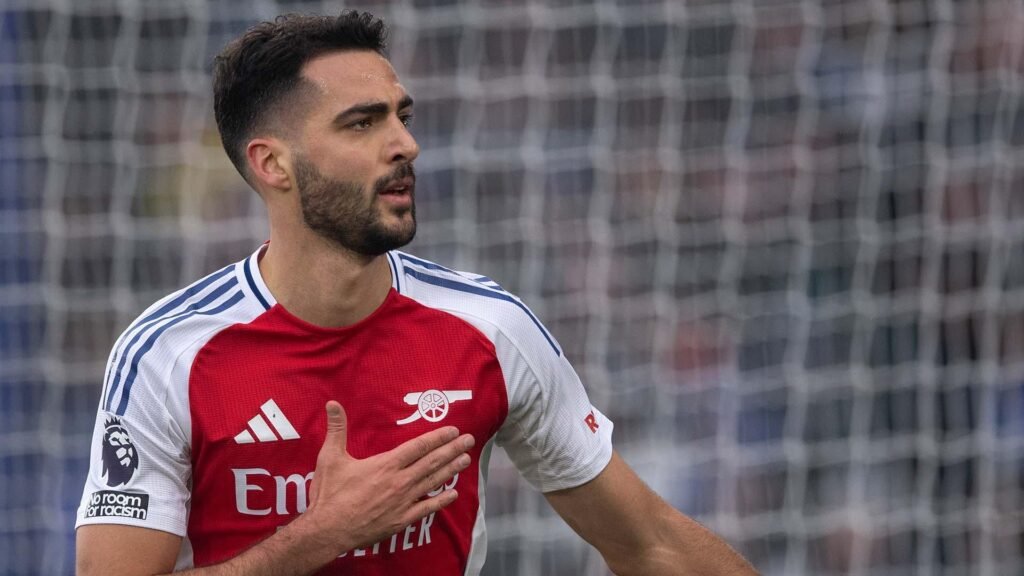
Mikel Merino Early Life and Development: The Foundations of a Versatile Thinker
Mikel Merino was raised in the footballing culture of Pamplona, a region known for physicality, collective discipline, and competitiveness. Unlike many Spanish midfielders who enter elite academies at extremely young ages, Merino matured gradually, developing both his technical abilities and physical tools simultaneously. His early years focused on the basics: passing under pressure, using both feet, positioning during defensive transitions, and reading the rhythm of matches.
1.1. Exposure to Multiple Roles
Young Merino did not grow up confined to a single position. He was rotated between defensive midfield, central midfield, occasional center-back spells, and in some youth stages, even played more advanced roles. This positional diversity allowed him to understand multiple layers of the pitch, preparing him to later become one of the most tactically adaptable players in Spain.
1.2. Development of Game Intelligence
Spanish football heavily emphasizes game intelligence through rondos, positional play patterns, and decision-making drills. Merino embraced these concepts early. He learned how to:
- Use body orientation to create passing lanes
- Control tempo through first touch
- Protect the ball under pressure
- Recognize when to accelerate play and when to slow it
These intellectual foundations became central to his identity.
1.3. The Growth of Physical Presence
Unlike many Spanish midfielders who rely primarily on technique, Merino developed into a tall, commanding presence. His aerial dominance, long stride, and ability to shield the ball gave him advantages few Spanish midfielders possessed. This balance between finesse and strength would later make him indispensable in high-intensity leagues.
Mikel Merino Borussia Dortmund and the First Lessons of European Football’s Highest Demands
A significant turning point in Merino’s career came when he moved to Borussia Dortmund, a club that thrives on intensity, vertical transitions, and high-level tactical discipline. Although his time there was not long, it forged important qualities that shaped his evolution.
2.1. Adaptation to a Faster Tempo
The Bundesliga exposed Merino to:
- Faster transitions
- Aggressive pressing systems
- Higher athletic demands
- The need for quicker decision-making
He learned to make vertical passes in tight spaces, break lines more rapidly, and adapt to physical duels at an elite level.
2.2. Tactical Discipline Under Pressure
Dortmund required precision from midfielders in terms of:
- Press resistance
- Pressing triggers
- Rotational movements
- Counter-pressing structure
Merino absorbed these systems deeply, integrating them into his playing identity.
2.3. Handling Limited Playing Time
Dortmund had intense competition, which meant Merino did not always start. Instead of stagnating, he used the experience to sharpen his mental toughness. Learning from high-level players accelerated his development, preparing him for his future leadership roles.
Mikel Merino England: The Test of Physicality and Adaptability
Merino’s experience in England pushed him into a league known for intensity, duels, aerial battles, and end-to-end football. This phase served as the ultimate examination of his ability to adapt.
3.1. Strategic Physical Evolution
In England, Merino realized the importance of:
- Faster anticipation
- Winning second balls
- Tackling with calculated aggression
- Using height and strength to dominate midfield zones
He refined his defensive timing while improving his ball retention in chaotic match scenarios.
3.2. Growth in Confidence
Playing in an environment where midfielders are constantly pressed forced Merino to trust his technical abilities. His composure grew significantly. He became more comfortable receiving the ball with opponents closing in, turning under pressure, and maintaining balance during challenges.
Mikel Merino Real Sociedad: Becoming the Complete Midfield General
At Real Sociedad, Merino found the perfect environment to express the full range of his capabilities. Sociedad’s possession-based but physically structured style complements his dual identity: the technical Spanish organizer and the combative modern midfielder.
4.1. Role Evolution
Merino plays as:
- A deep-lying midfielder
- A box-to-box controller
- A defensive shield
- A progressive distributor
- A late-arriving goal contributor
Few players balance so many roles simultaneously, and Real Sociedad built their midfield structure around his versatility.
4.2. Tactical Understanding at Sociedad
Under system-based football, Merino perfected:
- Triangular passing sequences
- Rotations with fullbacks and pivots
- Press resistance in crowded midfield
- Long-ball switches to wingers
- Defensive screening and interception timing
4.3. Commanding Presence
Merino’s leadership at Sociedad is notable not only for his communication but for his authority in controlling match tempo. He dictates the rhythm, decides when to build patiently, and recognizes when sudden verticality can break opponents.
Mikel Merino International Identity: A Reliable Brain in Spain’s Midfield Structure
Spain’s midfield has long been defined by precision, possession, and intelligence. Merino adds something unique to that structure: height, strength, aerial control, and defensive robustness without sacrificing the principles of Spanish football.
5.1. Complementing Other Midfielders
Merino seamlessly complements:
- Deep orchestrators
- Quick pass-and-move interiors
- Defensive controllers
- More advanced creators
His adaptability allows coaches to adjust formations without losing balance.
5.2. Interpretation of Space
Spain values players who understand positional play. Merino excels at:
- Identifying open zones
- Making late runs into the box
- Offering passing angles
- Maintaining structural integrity
5.3. A Trustworthy Big-Match Player
International matches demand reliability, composure, and awareness. Merino consistently performs with maturity, ensuring Spain maintains control even under pressure.
Mikel Merino Detailed Breakdown of Playing Style
Merino’s skill set deserves a full, layered breakdown. His style combines the qualities of a deep midfielder, defensive anchor, and progressive conductor.
6.1. Passing Range and Distribution
Merino’s passing variety is one of his strengths:
- Short passes in tight pockets
- Medium-range switches
- Driven passes to break lines
- Lofted through balls to wingers
- Calm recycling under pressure
He uses his left foot to manipulate passing angles, often playing diagonal balls that destabilize opponents.
6.2. Ball Carrying
Although not the fastest player, Merino carries the ball with purpose:
- Maintains tight control
- Uses body feints
- Shields the ball with strength
- Advances play in organized sequences
6.3. Defensive Intelligence
Merino excels defensively because of:
- Positional awareness
- Spatial reading
- Timely interceptions
- Aerial clearances
- Controlled tackling
He is not reckless but methodical, ensuring he covers spaces rather than chasing the ball.
6.4. Aerial Dominance
This is a defining trait:
- Wins duels against taller opponents
- Dominates set pieces
- Clears danger in defensive corners
- Scores from attacking headers
His timing, leap, and strength make him elite in aerial scenarios.
6.5. Pressing and Counter-Pressing
Merino understands pressing triggers:
- The moment when the ball is played backward
- Lateral transitions
- Under-hit passes
- Opponent hesitation
He presses aggressively but intelligently, aiming to regain control without compromising structure.
6.6. Late Runs into the Box
One of his underrated weapons is the ability to arrive late into the penalty area. This technique allows him to avoid early marking and exploit gaps for scoring opportunities.
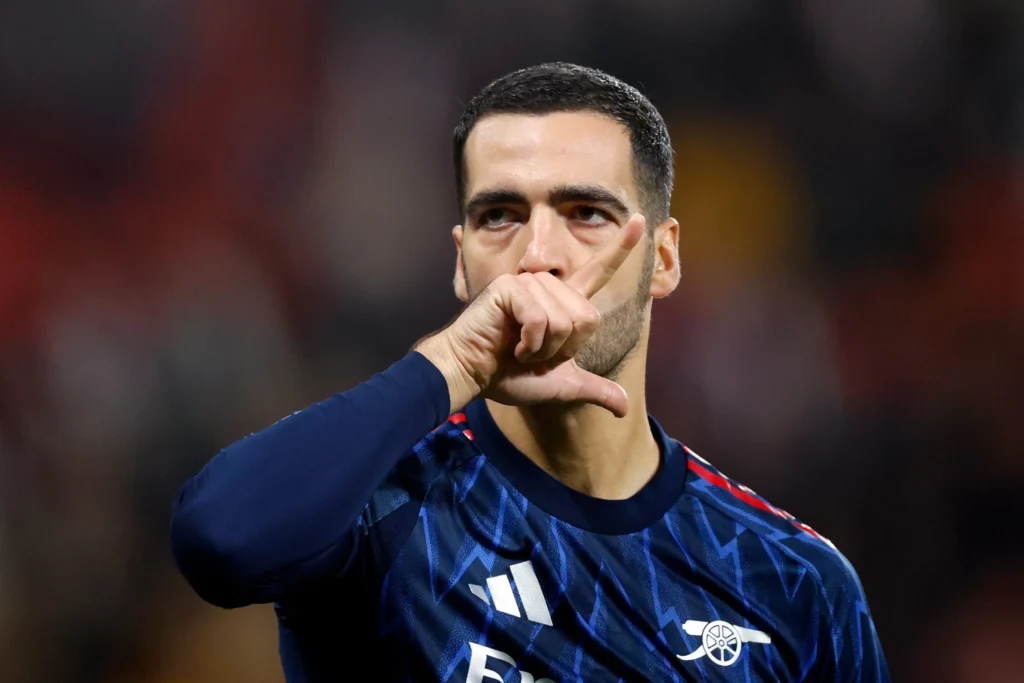
Mikel Merino Leadership Identity: The Quiet General
Merino’s leadership style is not built on loud commands but on consistency, communication, and trust.
7.1. Calm Authority
He leads by example:
- Maintains composure
- Reads situations calmly
- Makes rational decisions
- Demonstrates discipline
Teammates rely on his steadiness.
7.2. Tactical Communication
Merino constantly:
- Organizes midfield shape
- Directs pressing angles
- Guides younger players
- Maintains line integrity
He functions as a pivot between defensive and offensive units.
7.3. Mental Maturity
His mentality is shaped by resilience. He has navigated multiple leagues, competition pressures, and tactical shifts, developing a thick layer of experience that he channels into leadership.
Mikel Merino Strengths: What Makes Mikel Merino Elite
8.1. Tactical Intelligence
He understands systems, positional requirements, and game patterns at an elite level.
8.2. Physical Dominance
Strong frame, aerial power, stamina, balance in duels.
8.3. Versatility
Can play in multiple midfield roles depending on team structure.
8.4. Reliability
Consistently performs without dramatic dips in form.
8.5. Progressive Decision-Making
Always looks to improve team positioning, not just retain possession.
Mikel Merino Weaknesses: Areas That Challenge Him
9.1. Limited Pace
Not a sprinter, which can affect transitions.
9.2. Overcommitment
Sometimes commits too early in duels.
9.3. Physical Demands
His playing style requires high energy, which can lead to fatigue over prolonged seasons.
Mikel Merino Tactical Influence on Modern Spanish Football
Merino is part of Spain’s evolution away from purely possession-focused football toward a more balanced model incorporating:
- Height
- Aerial strength
- Physicality
- Defensive control
- Vertical passing
He represents the new Spanish midfielder, capable of competing in both technical and physical environments.
Mikel Merino Long-Term Legacy and Future Projection
Mikel Merino is carving a significant legacy defined by:
11.1. Modern Midfield Blueprint
He symbolizes versatility, intelligence, and balance.
11.2. Reliability in Elite Structures
Clubs and national teams trust him in crucial roles.
11.3. Longevity Potential
His style relies more on reading the game than athletic explosiveness, making it sustainable for years.
Conclusion: The Modern Master of Midfield Balance
Mikel Merino’s career is a blend of intelligence, physicality, and tactical maturity. He is a midfielder who understands the game deeply, influences matches quietly but profoundly, and provides a structural backbone to every team he joins. His evolution illustrates how modern football values players who can merge traditional technique with modern athletic requirements.
Merino is not merely a midfielder; he is a system stabilizer, a tempo regulator, and a strategic thinker. His continued influence on club and country reflects his mastery of the art of midfield control. If he sustains fitness and consistency, his legacy will stand as one of the defining profiles of the contemporary Spanish midfield.