

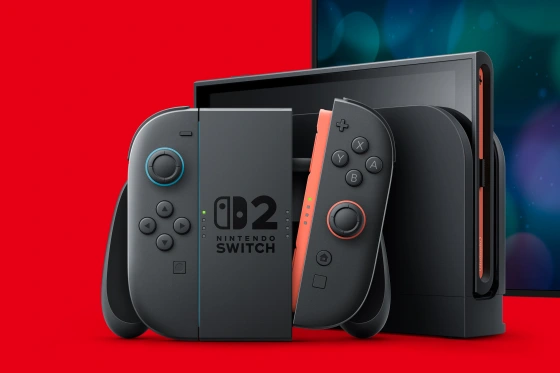
Overview Table
| Category | Summary |
|---|---|
| Product Name | Nintendo Switch 2 |
| Core Concept | Next-generation hybrid system blending portable convenience with living-room power |
| Key Hardware Principle | Custom Nintendo APU designed for performance, efficiency, and scalable gameplay |
| Display | Larger, brighter, high-refresh portable screen |
| GPU/CPU Target | Significant boost over original Switch with modern rendering pipelines |
| Storage | Expanded internal storage and faster memory architecture |
| Unique Strength | Backward compatibility for existing Switch library with enhancement features |
| Key Identity | Hybrid-first design philosophy with improved battery life and durable build |
| Target Player Base | Casual gamers, families, collectors, and performance-driven Nintendo fans |
| Strategic Goal | Extend Nintendo’s hybrid dominance while pushing into a more cinematic, visually robust era |
Introduction: A New Era for Nintendo’s Hybrid Vision
Few consoles in gaming history have reshaped player expectations as dramatically as the original Nintendo Switch. Its core promise, the ability to take console-quality experiences anywhere, established not only a commercially triumphant platform but a new identity for Nintendo as a hybrid-focused manufacturer. As the gaming landscape continued evolving, expectations rose. Players wanted richer worlds, smoother performance, stronger hardware longevity, and displays that matched modern standards.
The Nintendo Switch 2 enters this landscape not just as an upgrade but as an evolution of Nintendo’s design philosophy. It is built to address modern expectations while preserving the characteristics that defined the original Switch: accessibility, flexibility, simplicity, and playful innovation. Importantly, Nintendo does not abandon what worked; instead, it enhances, refines, and matures the hybrid vision.
Where the original Nintendo Switch 2 symbolized reinvention, the Switch 2 symbolizes refinement. It takes the essence of Nintendo Switch 2 philosophy and channels it through modern technology, improved engineering, and a deeper understanding of how players use hybrid systems today.
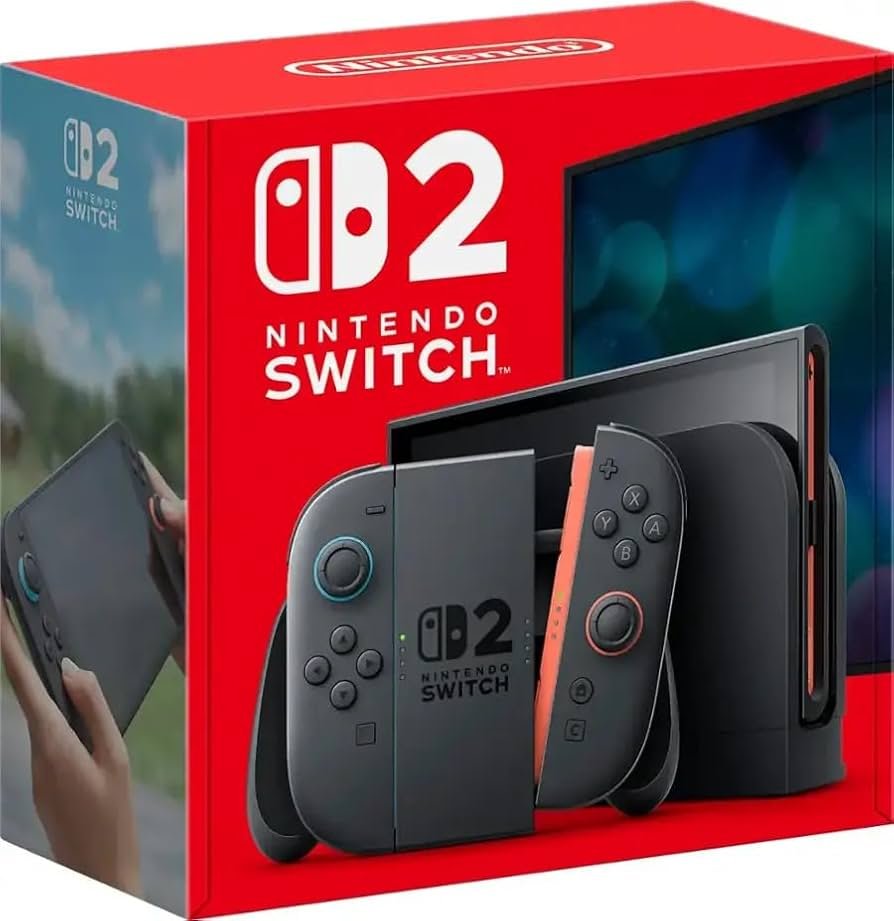
Nintendo Switch 2 Design Philosophy: Hybrid Identity, Reinforced and Reimagined
Nintendo Switch 2 design ethos has always placed user experience above raw specification sheets. With the Switch 2, this philosophy remains intact but more ambitious. The hybrid identity is preserved, yet the system is built with a sharper understanding of three critical user demands:
- Hybrid Versatility
A console that feels equally powerful and comfortable whether docked or portable.
The Switch 2 strengthens this dual-mode identity by ensuring consistent performance scaling, ergonomic improvements, and a more robust display experience. - Durability and Longevity
Nintendo devices traditionally age gracefully, and the Switch 2 emphasizes build quality, battery reliability, and software longevity. - Performance for Modern Games
While Nintendo prioritizes innovative design, contemporary games demand certain baseline technical capabilities.
The Switch 2 answers this with stronger compute power, smoother rendering, and modern memory architecture.
The design philosophy revolves around respecting player habits. Millions of users treat their Switch as both a home system and a travel companion. The Switch 2 continues this tradition while meeting higher expectations established by evolving technology standards.
Nintendo Switch 2 Hardware Architecture: Balancing Power and Efficiency
3.1 Processor and Graphics Evolution
The Switch 2 uses a custom Nintendo APU designed to balance modern performance with battery efficiency. It is not built to compete directly with stationary consoles but to maximize possibilities within a hybrid format. The processor offers higher clock speeds, more efficient cores, and stronger handling of physics, AI routines, and world streaming.
The GPU sees the most dramatic leap compared to the original Switch. The original system was engineered within significant technical constraints, but the Switch 2 benefits from years of advancements in mobile graphics technology. This results in:
- Stronger shader performance
- Improved lighting capabilities
- More stable rendering
- Better anti-aliasing
- Efficient energy scaling
The GPU uplift is transformative for developers who previously navigated tight hardware limits.
3.2 Memory and Storage Improvements
Storage limitations were one of the core challenges of the original Switch era. The Switch 2 addresses this through:
- More internal storage
- Faster read/write architecture
- Better bandwidth between memory components
- Support for higher-resolution texture pipelines
Games load faster, worlds stream more smoothly, and developers face fewer creative limitations.
3.3 Thermal and Power Engineering
Hybrid systems demand tight thermal management. The Switch 2 incorporates:
- A refined cooling structure
- Quiet, efficient fan control
- Power scaling optimized for portable and docked modes
These engineering improvements ensure sustained performance without excessive heat or noise. The system feels more stable and smoother across extended play sessions.
3.4 Battery Life and Efficiency
The Switch 2 improves battery management through:
- A more efficient processor
- Better screen technology
- Smarter power distribution systems
This results in extended playtime in real conditions, addressing a major expectation from modern players.
Nintendo Switch 2 Display and Visual Technology: A Window Into New Worlds
The Switch 2 introduces a significant step forward in portable display quality. The original Switch’s screen served its purpose but gradually felt dated in contrast with modern devices. The new display features:
- A larger size
- Higher resolution
- Better color accuracy
- Improved brightness
- Higher refresh rate possibilities
This modern visual clarity enhances everything from fast-paced action to slow-paced exploration.
4.1 Portable Screen Impact
The screen is central to the Switch identity. By improving brightness and color depth, the Switch 2 supports visually demanding games without feeling constrained by portable limitations. Textures appear cleaner, particle effects sharper, and overall gameplay feels more fluid.
4.2 Docked Output Enhancements
When docked, the Switch 2 benefits from improved output capabilities. The system aims for:
- Higher resolutions
- More stable performance
- Better compatibility with modern televisions
- Smoother frame pacing
This transforms the docked experience into a more cinematic and contemporary display experience.
Nintendo Switch 2 Backward Compatibility: Preserving a Legendary Library
Nintendo understands that the Switch library is one of the most successful in gaming history. Backward compatibility ensures players retain value in their existing games while benefiting from enhancements on the new hardware.
Backward compatible titles gain improvements such as:
- Faster load times
- Higher frame stability
- Dynamic resolution improvements
- Reduced stutter
- Shorter transition delays
This feature anchors the Switch 2 within Nintendo’s ongoing ecosystem rather than segmenting it.
Nintendo Switch 2 Hybrid Controls and Hardware Feel
6.1 Joy-Con Evolution
The Joy-Con design is iconic, but it presented reliability issues. The Switch 2 refines the concept with:
- Better analog stick durability
- More responsive buttons
- Improved ergonomic curves
- Enhanced wireless stability
These adjustments ensure comfort in both handheld and detached mode.
6.2 Build Quality Enhancements
Nintendo prioritizes durability. The Switch 2’s improved materials, more rigid frame, and reinforced docking mechanism reflect a premium build approach while maintaining portability.
Nintendo Switch 2 Performance Modes and Visual Scaling
Modern game development increasingly relies on scalable performance. The Switch 2 supports:
- Dynamic resolution scaling
- Higher frame-rate modes
- Portable/docked performance targets
- Improved anti-aliasing solutions
- Faster asset streaming
While the console does not chase extreme specification competition, it delivers consistency and reliability within its design limits.
First-Party Game Impact: Nintendo’s Creativity Unleashed
The true power of a Nintendo console is defined not by hardware alone but by how Nintendo’s first-party teams leverage it. The Switch 2 offers room for more ambitious experiences:
8.1 Larger Worlds
Developers can design worlds with:
- More detailed environments
- Denser foliage
- More reactive physics
- Better lighting
- More dynamic weather systems
8.2 Improved Character Rendering
Nintendo’s signature character-driven art styles gain additional depth through:
- Smoother animations
- Better shading
- Higher quality textures
- More natural lighting responses
8.3 Innovative Mechanics
More powerful hardware encourages new gameplay experiments involving:
- AI-driven systems
- More complex puzzles
- Multi-layered physics
- Larger connected environments
The Switch 2 expands Nintendo’s design playground.
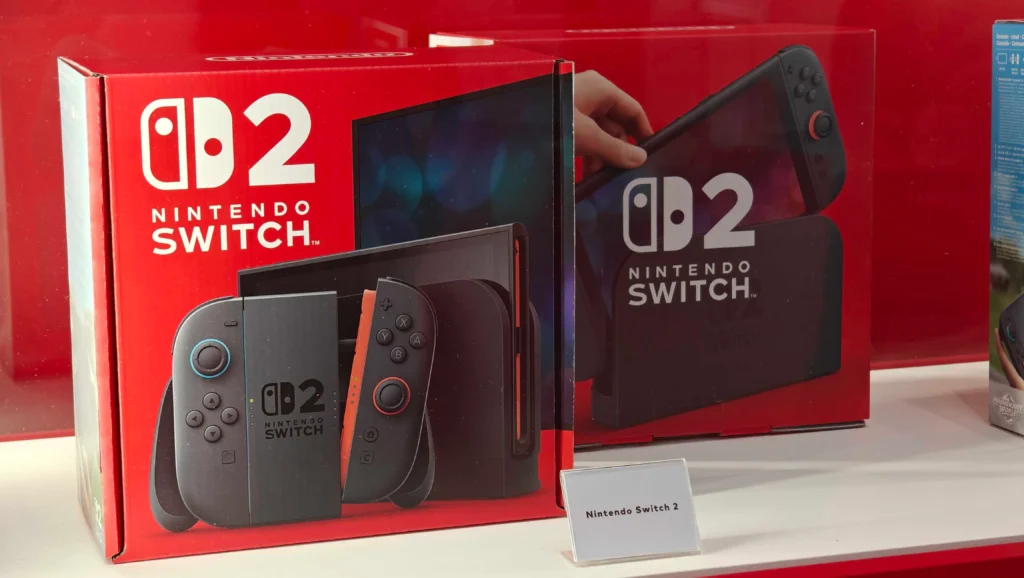
Nintendo Switch 2 Third-Party Support: A More Open Highway
Third-party developers often struggled with the original Switch’s limitations. The Switch 2 alleviates many of those constraints by offering:
- Improved performance targets
- Better compatibility with modern engines
- Stronger portable optimization possibilities
- More predictable rendering outcomes
While it may not rival stationary consoles, it enables more third-party games to run comfortably, broadening the library.
Nintendo Switch 2 Audio Improvements: Immersion Through Sound
The Switch 2 features refined internal audio processing capable of:
- Clearer spatial sound
- Deeper bass representation
- High-clarity environmental audio
- More accurate directional cues
These improvements support both portable speakers and headphone output.
Nintendo Switch 2 System Software and User Interface Enhancements
A modern console must offer a smooth user experience. The Switch 2 improves upon:
- Faster interface loading
- Better multitasking
- Streamlined navigation
- Quicker access to games
- Improved digital storefront responsiveness
The OS feels more fluid and stable under the expanded hardware capabilities.
Nintendo Switch 2 Storage Ecosystem and Future-Proofing
The Switch 2 adopts a more resilient and expandable storage architecture. With game sizes increasing globally, the system’s internal space and external card compatibility are essential for long-term usability.
As developers push graphical boundaries, efficient asset management ensures the Switch 2 remains a reliable system throughout its lifecycle.
Nintendo Switch 2 Competitive Positioning: Nintendo’s Path Forward
Nintendo avoids competing directly with high-end console hardware from other manufacturers. Instead, the Switch 2 represents Nintendo’s strategy of establishing an independent category: a hybrid that stands on its own merits. Its uniqueness lies in:
- First-party excellence
- User-friendly design
- Portability
- Low entry friction
- High library accessibility
The Switch 2 extends this strategy into a more mature technical era.
Nintendo Switch 2 The Psychological Appeal of the Upgrade
The Switch 2 appeals to both new players and existing ones. For longtime Switch users, the upgrade:
- Feels familiar
- Maintains compatibility
- Enhances everyday experience
For new users, it provides a modern entry point to Nintendo’s ecosystem.
The psychological comfort of continuity combined with genuine technical advancement makes the Switch 2 both exciting and approachable.
Conclusion: The Nintendo Switch 2 as a Mature Hybrid Platform
The Nintendo Switch 2 represents the next stage in Nintendo’s hybrid evolution. It refines the original concept with modern hardware, better performance, improved durability, enhanced visuals, stronger audio, and a more vibrant display. It does not abandon simplicity or accessibility; instead, it updates them for a new gaming era.
This system is built to last. It supports the vast Switch library, empowers future first-party innovation, and opens doors for more flexible third-party development. While it does not chase specification extremes, it embraces practical performance that elevates both portable and docked experiences.
Nintendo has crafted a hybrid machine that honors the past, embraces the present, and prepares for the future.
The Switch 2 stands as a testament to Nintendo’s philosophy: innovation driven by player experience, strengthened by technology, and defined by timeless design.