

Overview Table
| Aspect | How Public WiFi Poses a Risk | Potential Impact |
|---|---|---|
| Network Encryption | Open or weakly encrypted networks | Data interception, eavesdropping |
| Man-in-the-Middle Attacks | Attackers intercept communications | Theft of credentials, sensitive information |
| Rogue Hotspots | Fake WiFi networks mimicking legitimate ones | Complete data compromise, malware injection |
| Malware Distribution | Exploit network vulnerabilities | Device infection, unauthorized access |
| Session Hijacking | Stealing session cookies or tokens | Unauthorized account access |
| User Behavior | Logging into sensitive accounts | Higher risk of exposure |
| Device Vulnerabilities | Unpatched software, insecure apps | Increased susceptibility to attacks |
| Network Monitoring | Data captured by network administrators | Privacy compromise, tracking |
Introduction
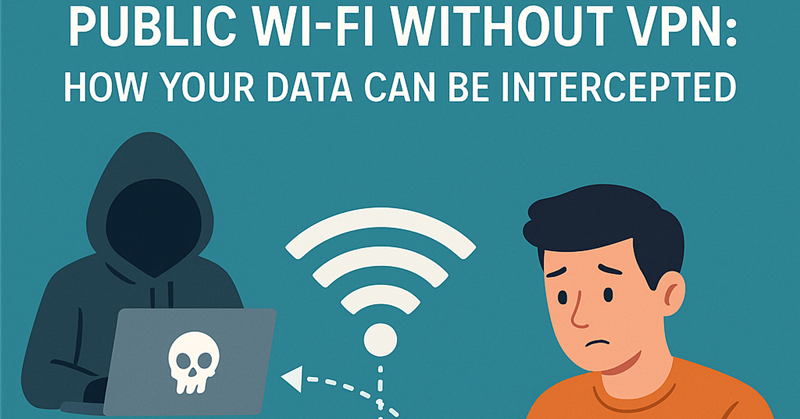
Public WiFi networks have become ubiquitous in modern life, offering convenience and connectivity in cafes, airports, hotels, libraries, and even city streets. They provide an easy way to check emails, browse the web, or complete online tasks without consuming mobile data. However, this convenience comes with significant security risks. Public WiFi is inherently less secure than private networks, making users vulnerable to data breaches, identity theft, malware infections, and surveillance.
Understanding how public WiFi can compromise personal and professional data requires exploring network architecture, encryption methods, user behavior, and attacker techniques. This article combines narrative storytelling, analytical reasoning, technical insight, and journalistic observation to provide a comprehensive examination of the risks, the mechanics of attacks, and strategies for safer usage.
Understanding Public WiFi Networks
What Is Public WiFi
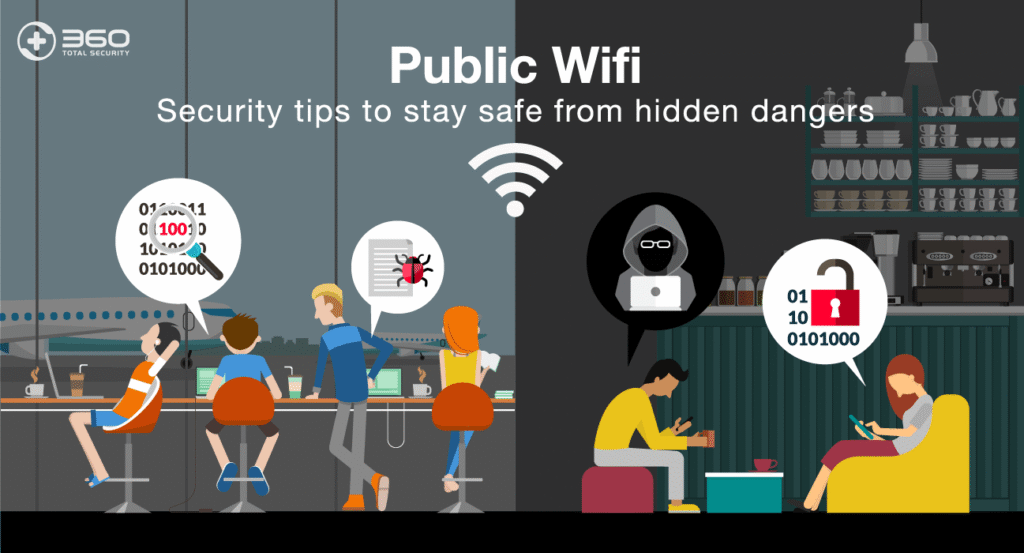
Public WiFi refers to wireless networks that are freely accessible to the general public or a large group of users. Unlike home or corporate networks, which are often protected by strong passwords and security policies, public WiFi often operates with minimal security measures.
These networks can be completely open, requiring no authentication, or partially secured with shared passwords. While they provide convenience, the lack of individualized access control makes it easier for malicious actors to exploit vulnerabilities.
Why Public WiFi Is Attractive to Users
The allure of public WiFi lies in its convenience, cost savings, and accessibility. Travelers can avoid high roaming charges, students can complete assignments in libraries, and professionals can work remotely without relying on mobile data. However, the very openness that provides convenience is also what makes these networks inherently risky.
Encryption and Data Exposure
The Role of Encryption
Encryption is the process of converting information into a coded format that can only be deciphered by authorized parties. Strong encryption is critical to maintaining the confidentiality and integrity of data transmitted over WiFi networks.
Public WiFi networks often use weak encryption protocols such as WEP (Wired Equivalent Privacy) or outdated WPA versions. Some networks are completely unencrypted, meaning that any data sent over them is transmitted in plain text, accessible to anyone within range.
Consequences of Weak Encryption
Without strong encryption, sensitive information such as login credentials, personal messages, credit card numbers, and business communications can be intercepted. Attackers using simple tools can capture this data in real-time, often without the knowledge of the user.
Even when encryption is present, if it is outdated or improperly configured, it can be bypassed using modern hacking techniques. Users often assume that connecting to a network automatically guarantees safety, which is a dangerous misconception.
Man-in-the-Middle Attacks
How Man-in-the-Middle Attacks Work
A man-in-the-middle (MITM) attack occurs when an attacker positions themselves between a user and the network. By intercepting communication, the attacker can read, modify, or inject data without the user’s awareness.
In public WiFi environments, MITM attacks are facilitated by the network’s openness. Attackers can use tools to impersonate legitimate routers, alter DNS settings, or exploit vulnerabilities in WiFi protocols.
Risks and Examples
MITM attacks can lead to stolen login credentials, intercepted financial transactions, and unauthorized access to sensitive corporate data. Even encrypted connections such as HTTPS can be compromised if attackers successfully manipulate certificates or exploit browser vulnerabilities.
The journalistic reality is that MITM attacks are not rare; they occur frequently in locations with high concentrations of users, such as airports or coffee shops.
Rogue Hotspots and Fake Networks
What Are Rogue Hotspots
Rogue hotspots are WiFi networks created by attackers to mimic legitimate public networks. They often have similar names to trusted networks, making it difficult for users to distinguish between safe and malicious connections.
Techniques and Risks
Once a user connects to a rogue hotspot, the attacker can capture all transmitted data, inject malware, or redirect the user to phishing websites. This type of attack exploits human behavior, relying on the assumption that users will trust networks with familiar names.
In urban areas, rogue hotspots are a common tool for cybercriminals, allowing them to target multiple victims simultaneously with minimal effort.
Malware Distribution via Public WiFi
Exploiting Network Vulnerabilities
Public WiFi networks can be used to distribute malware by exploiting vulnerabilities in connected devices. Attackers may inject malicious code into unencrypted traffic or leverage unsecured protocols to compromise systems.
Consequences for Devices
Malware infections can lead to data theft, unauthorized remote access, ransomware attacks, or persistent monitoring. Devices with outdated operating systems, unsecured applications, or disabled security settings are particularly vulnerable.
From a technical perspective, malware propagation over public WiFi does not require direct user interaction; passive attacks can succeed as long as devices are connected and inadequately protected.
Session Hijacking
Understanding Session Hijacking
Session hijacking occurs when an attacker steals authentication tokens or session cookies from a user’s active connection. These tokens allow the attacker to impersonate the user and gain access to online accounts without needing passwords.
Relevance to Public WiFi
Public WiFi is a fertile environment for session hijacking because attackers can monitor traffic on unencrypted networks or exploit weaknesses in encrypted sessions. Users who log into banking, email, or social media accounts are particularly at risk.
Session hijacking illustrates that even users who avoid entering passwords can be exposed if they fail to secure active sessions properly.
User Behavior and Risk Exposure
Human Factors in Data Security
User behavior plays a critical role in determining exposure to risks on public WiFi. Common risky behaviors include logging into sensitive accounts, downloading files from untrusted sources, and ignoring security prompts.
Psychological Aspects
The convenience and ubiquity of public WiFi create a false sense of security. Many users assume that using a familiar network automatically ensures safety, overlooking the underlying technical vulnerabilities.
Journalistic analysis shows that education and awareness are as important as technical safeguards in preventing data compromise.
Device Vulnerabilities and Patch Management
Role of Device Security
Devices connected to public WiFi are only as secure as their software and configuration. Outdated operating systems, unpatched applications, and poorly secured apps significantly increase vulnerability to attacks.
Importance of Regular Updates
Applying regular software updates, enabling firewalls, and using security applications are critical strategies. Security patches often fix vulnerabilities that attackers exploit on public networks.
From an analytical perspective, device hardening is the first line of defense against public WiFi risks, complementing cautious user behavior and network protections.
Network Monitoring and Privacy
Exposure to Monitoring
Public WiFi providers, network administrators, and malicious actors can potentially monitor user activity. Even if data is encrypted, metadata such as visited websites, connection times, and device identifiers can be collected.
Implications for Privacy
Network monitoring can compromise privacy, enabling tracking, targeted advertising, or even surveillance. Sensitive professional or personal activities conducted over public WiFi are therefore inherently vulnerable to exposure.
Journalistically, awareness of monitoring practices highlights the broader societal risks of open network environments beyond individual attacks.
Strategies for Safer Public WiFi Use
Use of Virtual Private Networks (VPNs)
VPNs encrypt all traffic between the device and a secure server, preventing eavesdropping on public networks. A reputable VPN can effectively mitigate most risks associated with untrusted WiFi.
Avoiding Sensitive Activities
Avoid logging into banking, payment, or critical work accounts over public WiFi unless a VPN or secure connection is used. Minimizing exposure reduces the potential impact of attacks.
Network Verification
Always verify the network name with the provider or signage. Avoid connecting to networks with generic or suspicious names.
Device and Browser Security
Enable firewalls, update software regularly, disable automatic connections to open networks, and use secure browsers with HTTPS enforcement. These measures collectively reduce risk.
Awareness and Education
Being informed about the types of attacks, potential consequences, and safe usage practices empowers users to make better decisions. Awareness is as crucial as technical protection.
Future Trends in Public WiFi Security
Increased Encryption Standards
Public networks are gradually adopting stronger encryption protocols, such as WPA3. These standards reduce the effectiveness of common attacks, though adoption is uneven.
AI and Threat Detection
Artificial intelligence and machine learning can detect anomalous traffic patterns, rogue hotspots, and potential MITM attacks in real-time, providing proactive protection.
User-Centric Security Tools
Future solutions are likely to provide intuitive, automated safeguards that alert users to risks, recommend safer network connections, and manage encryption without requiring advanced technical knowledge.
Conclusion
Public WiFi offers undeniable convenience but carries inherent security risks. Weak encryption, rogue hotspots, malware distribution, session hijacking, and human error all contribute to potential data compromise. Devices and networks may provide some protections, but vulnerabilities remain.
A combination of technical safeguards, cautious user behavior, and informed decision-making is essential for minimizing risk. Understanding the mechanics of attacks, the role of encryption, and the importance of device security empowers users to safely leverage public WiFi without exposing sensitive data.
Awareness, preparation, and proactive measures can transform public WiFi from a potential threat into a safe tool for connectivity, productivity, and convenience.