

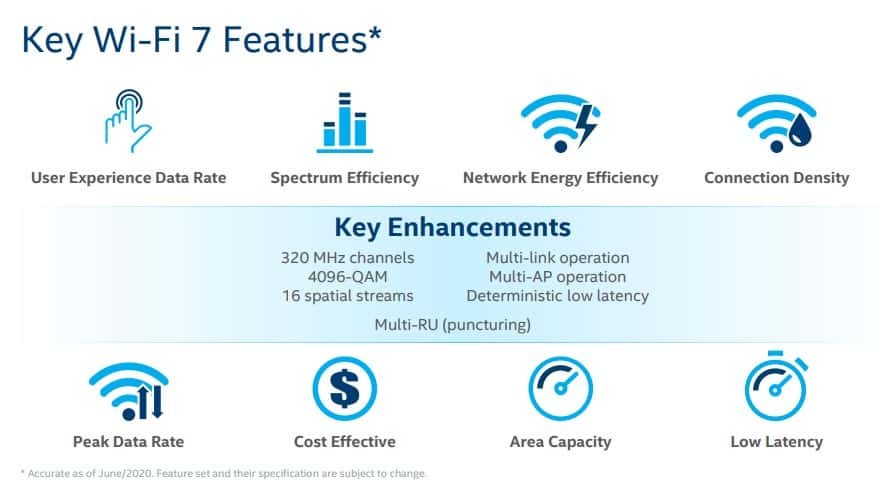
Overview Table of Wi-Fi 7
| Aspect | Details |
|---|---|
| Official Standard Name | IEEE 802.11be |
| Common Name | Wi-Fi 7 |
| Maximum Theoretical Speed | Up to extremely high multi-gigabit levels |
| Frequency Bands | 2.4 GHz, 5 GHz, 6 GHz |
| Key Technologies | Multi-Link Operation, 320 MHz channels, 4096-QAM |
| Primary Focus | Speed, ultra-low latency, reliability |
| Backward Compatibility | Works with older Wi-Fi devices |
| Ideal Use Cases | Gaming, 8K streaming, AR/VR, smart homes, enterprises |
| Typical Devices | Routers, smartphones, laptops, PCs, IoT hubs |
Introduction to Wi-Fi 7
Wi-Fi 7 represents the next major evolution in wireless networking, designed to meet the demands of an increasingly connected, data-intensive world. As digital lifestyles expand across ultra-high-definition streaming, cloud computing, immersive gaming, smart homes, industrial automation, and emerging technologies like extended reality, existing wireless standards face growing pressure. Wi-Fi emerges as a response to these pressures, redefining how speed, latency, reliability, and network efficiency are delivered over the air.
Rather than being a simple incremental upgrade, Wi-Fi introduces architectural changes that fundamentally improve how wireless data is transmitted and managed. It is engineered not just for faster internet connections, but for smarter, more resilient networks capable of supporting dozens or even hundreds of devices simultaneously without performance collapse.
This article explores Wi-Fi in depth, examining its technology, performance capabilities, features, device compatibility, and real-world impact. The goal is to provide a clear, technically accurate, and experience-driven understanding of what Wi-Fi 7 is, why it matters, and how it will shape future connectivity.
Evolution of Wi-Fi Standards
From Early Wireless to Modern Connectivity
Wi-Fi has evolved significantly since its early days, moving from modest data rates suitable for email and basic browsing to high-performance networks capable of replacing wired connections. Each generation introduced improvements in speed, efficiency, and device handling.
Earlier standards focused primarily on increasing raw throughput. Over time, attention shifted toward optimizing performance in real-world environments where multiple devices compete for bandwidth. Wi-Fi 6 and Wi-Fi 6E laid the groundwork for efficiency and congestion management, while Wi-Fi builds on these foundations to address emerging performance bottlenecks.
Why a New Standard Was Needed
Modern networks face challenges that older Wi-Fi standards were not designed to handle. Homes and workplaces now contain numerous connected devices, many of which require consistent low-latency connections. Streaming quality expectations have increased, online gaming demands near-instant responsiveness, and cloud services require stable, high-throughput links.
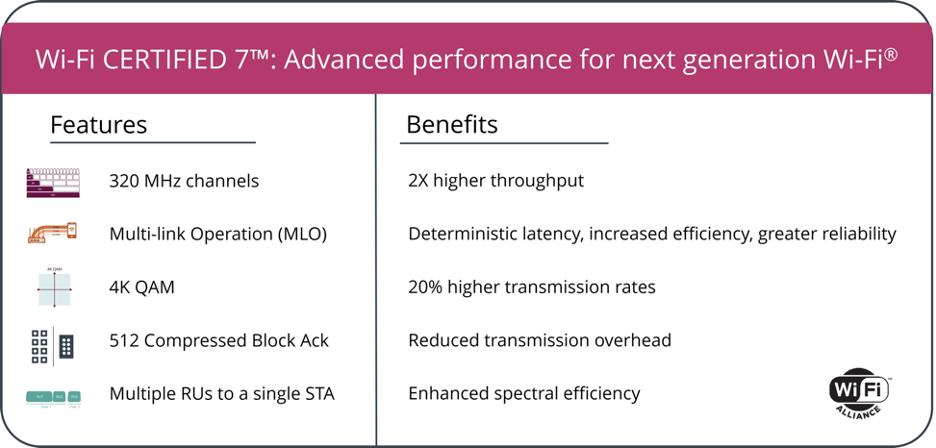
Wi-Fi addresses these challenges by introducing parallel data transmission, wider channels, higher modulation efficiency, and advanced coordination between frequency bands.
Core Technology Behind Wi-Fi 7
Multi-Link Operation
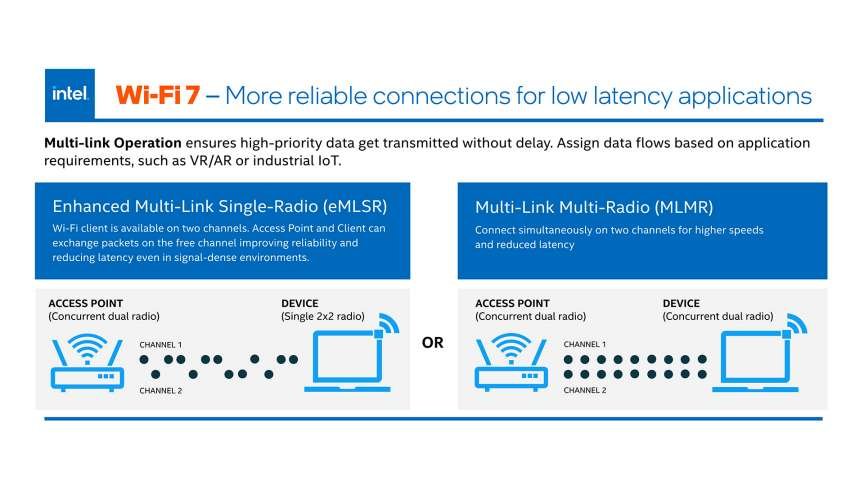
One of the most transformative features of Wi-Fi is Multi-Link Operation. This technology allows a device to transmit and receive data simultaneously across multiple frequency bands and channels. Instead of relying on a single connection path, Wi-Fi dynamically uses several links at once.
This approach significantly reduces latency and improves reliability. If one band experiences interference or congestion, data can instantly shift to another without interrupting the connection. The result is a smoother, more consistent experience, particularly for time-sensitive applications.
Wider Channel Bandwidth
Wi-Fi supports extremely wide channels, allowing more data to flow at once. Wider channels increase peak throughput and reduce transmission delays for large data packets. This capability is particularly beneficial for ultra-high-resolution video streaming, large file transfers, and real-time collaboration.
The availability of these wide channels is enhanced by operation across multiple frequency bands, especially in less congested spectrum ranges.
Higher Modulation Efficiency
Wi-Fi introduces advanced modulation techniques that pack more data into each signal transmission. By encoding information more efficiently, networks achieve higher speeds without increasing power consumption proportionally.
This improvement benefits both high-performance devices and energy-constrained devices, making Wi-Fi 7 suitable for a wide range of use cases.
Advanced Scheduling and Coordination
The standard incorporates intelligent scheduling mechanisms that optimize how devices access the network. Data transmissions are coordinated to minimize collisions, reduce waiting times, and improve overall efficiency. This is particularly important in environments with many active devices.
Speed Capabilities of Wi-Fi 7
Theoretical Maximum Throughput
Wi-Fi is designed to deliver multi-gigabit speeds far exceeding previous generations. While real-world performance depends on hardware, network conditions, and configuration, the standard’s theoretical limits represent a significant leap forward.
These speeds enable wireless connections that rival or exceed many wired Ethernet setups, opening new possibilities for cable-free workstations and entertainment systems.
Real-World Performance Expectations
In practical scenarios, Wi-Fi 7 delivers noticeable improvements in responsiveness and sustained throughput rather than just peak speed. Users experience faster downloads, smoother streaming, and more consistent connections even under heavy network load.
Latency reduction is one of the most impactful improvements, making Wi-Fi especially appealing for gaming, video conferencing, and interactive applications.
Speed Consistency Across Devices
Wi-Fi prioritizes fairness and efficiency, ensuring that high-performance devices do not monopolize bandwidth at the expense of others. The network dynamically allocates resources based on demand, maintaining balanced performance across connected devices.
Latency and Reliability Improvements
Ultra-Low Latency Design
Latency refers to the delay between sending and receiving data. Wi-Fi significantly reduces latency through parallel transmission paths and faster scheduling. This improvement is critical for applications where even small delays can disrupt the experience.
Stability in Congested Environments
Wi-Fi networks remain stable even in dense environments such as apartment buildings, offices, or public spaces. Advanced interference management and spectrum utilization techniques help maintain reliable connections despite external noise.
Seamless Roaming and Switching
Devices can transition smoothly between access points and frequency bands without noticeable drops in connectivity. This is especially useful in large homes or enterprise environments with multiple routers or access points.
Frequency Bands and Spectrum Usage
Multi-Band Operation
Wi-Fi 7 operates across multiple frequency bands, each with distinct characteristics. Lower frequencies provide better range and penetration, while higher frequencies offer higher throughput. The standard intelligently combines these bands to maximize performance.
Efficient Spectrum Utilization
Advanced spectrum management ensures that available frequencies are used efficiently. The network adapts to changing conditions, selecting the optimal combination of channels and bands in real time.
Reduced Interference
Improved filtering and coordination minimize interference from neighboring networks and devices. This results in cleaner signals and more predictable performance.
Security Enhancements in Wi-Fi 7
Modern Encryption Standards
Wi-Fi continues the use of strong encryption protocols that protect data from unauthorized access. These measures ensure that wireless communication remains secure in both personal and professional environments.
Improved Authentication Mechanisms
Authentication processes are optimized for speed and reliability, reducing connection delays while maintaining high security standards.
Enterprise-Grade Security Features
For business and institutional use, Wi-Fi supports advanced security configurations that enable secure segmentation, monitoring, and access control.
Power Efficiency and Device Impact
Energy-Aware Networking
Despite its high performance, Wi-Fi incorporates energy-saving mechanisms that reduce power consumption. Devices can enter low-power states when idle, extending battery life.
Optimized for Mobile Devices
Smartphones, tablets, and laptops benefit from efficient data transmission that minimizes unnecessary radio usage. This balance between performance and efficiency is crucial for mobile computing.
Long-Term Hardware Sustainability
By improving efficiency and reducing retransmissions, Wi-Fi helps extend the usable lifespan of networking hardware.
Compatible Devices and Ecosystem
Wi-Fi 7 Routers
Routers are the foundation of any Wi-Fi network. These devices integrate advanced antennas, processing power, and radio components to support the standard’s features.
Smartphones and Tablets
Modern smartphones and tablets equipped with compatible chipsets can take full advantage of Wi-Fi speed and latency benefits. This enhances everyday activities such as streaming, gaming, and cloud access.
Laptops and Desktop PCs
Wi-Fi enables wireless workstations that perform at levels previously associated with wired connections. This flexibility supports modern work and creative workflows.
Smart Home and IoT Devices
Smart home hubs and connected devices benefit from improved reliability and coordination, reducing delays and connectivity issues.
Use Cases and Practical Applications
High-Resolution Streaming
Wi-Fi supports seamless streaming of ultra-high-definition content without buffering or quality degradation.
Online Gaming
Low latency and stable connections enhance competitive gaming experiences, reducing lag and improving responsiveness.
Virtual and Augmented Reality
Immersive applications require consistent high throughput and minimal delay, both of which are core strengths of Wi-Fi .
Remote Work and Collaboration
Video conferencing, cloud collaboration, and large file transfers benefit from improved reliability and speed.
Enterprise and Industrial Use
Businesses deploy Wi-Fi to support dense device environments, real-time data processing, and mission-critical applications.
Backward Compatibility and Transition
Working with Older Devices
Wi-Fi is backward compatible with previous Wi-Fi generations. Older devices can connect without issues, though they will not experience the full performance benefits.
Gradual Adoption Strategy
Users can upgrade routers first and add compatible devices over time, ensuring a smooth transition without disruption.
Network Optimization During Transition
Mixed-device networks continue to function efficiently, with Wi-Fi intelligently managing traffic across different standards.
Comparison with Previous Wi-Fi Generations
Performance Gains
Wi-Fi offers substantial improvements in speed, latency, and reliability compared to earlier standards.
Efficiency Improvements
Advanced scheduling and spectrum use result in better performance under load.
Future-Readiness
The standard is designed to support emerging technologies and usage patterns for years to come.
Challenges and Limitations
Hardware Availability
Adoption depends on the availability of compatible hardware across device categories.
Environmental Factors
Real-world performance can vary based on building materials, interference, and network configuration.
Cost Considerations
Early adoption may involve higher costs, which typically decrease as the technology becomes mainstream.
Future of Wireless Connectivity with Wi-Fi 7
Enabling New Experiences
Wi-Fi 7 lays the foundation for innovations in entertainment, productivity, and automation.
Supporting Digital Expansion
As digital ecosystems grow, Wi-Fi 7 provides the capacity and reliability needed to sustain them.
Long-Term Industry Impact
The standard influences device design, network architecture, and user expectations for wireless performance.
Final Perspective on Wi-Fi 7
Wi-Fi 7 represents a major advancement in wireless networking, addressing the limitations of previous standards while preparing for future demands. Its combination of speed, low latency, reliability, and efficiency transforms how devices connect and communicate.
Rather than focusing solely on raw performance, Wi-Fi 7 emphasizes consistency and intelligence, ensuring that networks perform reliably in real-world conditions. As compatible devices become more widespread, Wi-Fi 7 is set to redefine expectations for wireless connectivity across homes, businesses, and industries.