

Overview Table
| Aspect | Details |
|---|---|
| Term | RAM (Random Access Memory) |
| Function | Temporary storage for active applications and system processes |
| Types | DDR4, DDR5, LPDDR4X, LPDDR5, etc. |
| Typical Laptop/PC RAM | 8GB–32GB (2026 standards) |
| Smartphone RAM | 4GB–16GB (depends on usage) |
| Key Factors | Multitasking, gaming, content creation, data-intensive applications |
| Performance Impact | Faster app switching, smoother multitasking, reduced system lag |
| Upgrade Consideration | Dependent on motherboard/phone support and user needs |
| Signs You Need More RAM | Slow app switching, frequent disk swapping, system freezes |
Introduction: Understanding RAM in the Modern Context
What Is RAM, or Random Access Memory, is often referred to as the lifeblood of computing performance. While storage holds your documents, apps, and media permanently, RAM temporarily holds the information your device actively uses. Every task on your computer, smartphone, or tablet—whether it’s browsing the web, editing videos, playing games, or running multiple applications—relies on What Is RAM to operate efficiently.
In 2026, What Is RAM is no longer just a number printed on a sticker. Modern applications, operating systems, and games have evolved to demand more memory. Cloud integration, AI-based applications, and high-resolution content have pushed RAM requirements higher, making it crucial for both users and IT decision-makers to understand the role, types, and ideal capacity of RAM for various devices.
This article explores What Is RAM from multiple perspectives: technical functionality, practical usage, real-world performance impact, and guidance on how much What Is RAM you truly need in 2026. We adopt a hybrid tone—narrative, analytical, technical, and journalistic—to provide a complete, actionable understanding.
What RAM Actually Is
The Role of RAM in Computing
What Is RAM is a form of volatile memory that temporarily stores data that the processor needs while executing tasks. Unlike storage drives (HDDs or SSDs), RAM can be accessed at extremely high speeds. When you open a program, its data is loaded from storage into RAM for rapid access. Once the device powers off, RAM loses all stored information, which is why it is called “volatile.”
The efficiency of RAM directly affects:
- Multitasking capabilities
- Application load times
- Responsiveness of the operating system
- Gaming and graphical performance
- Productivity for data-intensive applications
Essentially, What Is RAM acts as a high-speed bridge between your processor and storage, enabling smooth operation across all tasks.
How RAM Differs from Storage
While storage devices like SSDs and HDDs provide long-term data retention, RAM is a temporary workspace. Storage determines how much data you can keep permanently; RAM determines how much your system can handle simultaneously. A device with large storage but insufficient RAM may feel sluggish, particularly when multitasking.
Types of RAM
DDR and Its Evolution
DDR (Double Data Rate) What Is RAM has evolved over the decades:
- DDR4: Mainstream in PCs since mid-2010s; offers balanced speed and power consumption.
- DDR5: Introduced high-speed memory, greater bandwidth, and improved energy efficiency; increasingly standard in high-performance systems.
- LPDDR4X / LPDDR5: Low-power variants common in smartphones and laptops to extend battery life while maintaining performance.
Each generation improves data transfer speed, latency, and power efficiency, which is critical as applications demand more memory bandwidth.
RAM Form Factors
- DIMM: Standard desktop RAM modules.
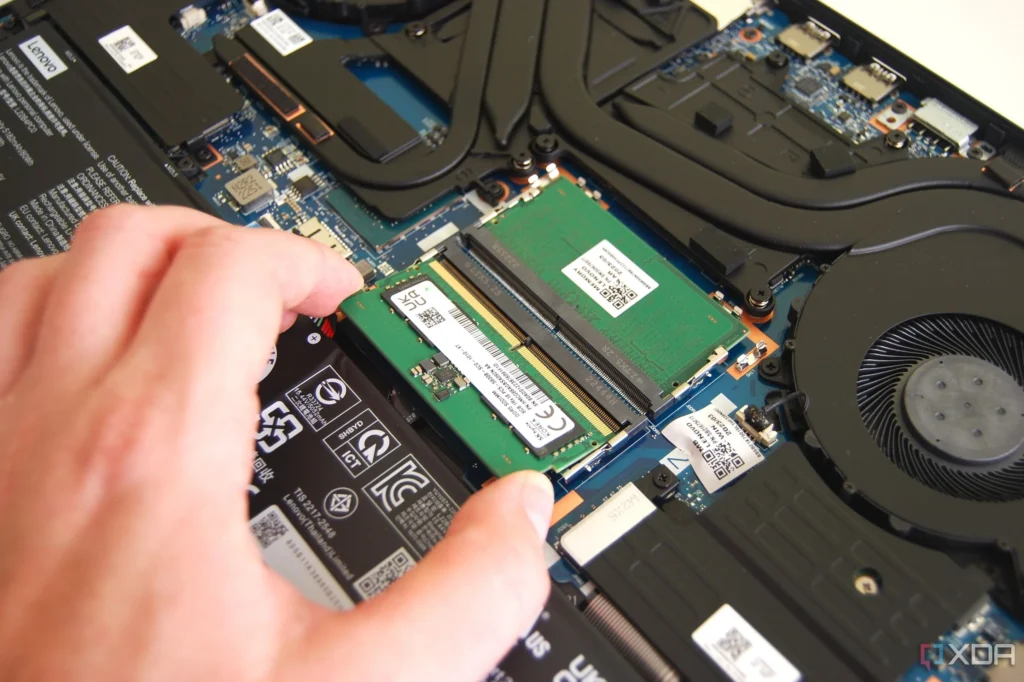
- SO-DIMM: Smaller form factor for laptops.
- Embedded RAM: Found in smartphones and tablets, soldered directly to the motherboard for space efficiency.
Compatibility depends on device type and motherboard architecture. Mixing RAM types across incompatible generations may reduce performance or prevent operation entirely.
How RAM Works in Real Life
Multitasking and Performance
When multiple applications are open, What Is RAM stores the active portions of each program. Insufficient RAM forces the system to swap data to storage (virtual memory), causing delays known as “disk thrashing.” The more RAM available, the less frequent this swapping, resulting in smoother multitasking.
Gaming and High-Performance Tasks
Games, 3D rendering software, and video editing programs rely heavily on RAM to store textures, assets, and temporary processing data. Modern AAA games may require 16GB–32GB of RAM to run optimally at high settings. Professional-grade content creation may demand even higher capacities, particularly when working with 4K or 8K media.
Mobile Devices and RAM Management
Smartphones with limited What Is RAM may close background apps frequently to free memory. In 2026, most mid-range devices feature 8GB–12GB of RAM, while premium devices may include 16GB or more. Efficient RAM management ensures app continuity and seamless navigation across multiple applications.
How Much RAM Do You Really Need?
Typical Usage Scenarios
| Device Type | Light Usage | Moderate Usage | Heavy Usage / Gaming / Productivity |
|---|---|---|---|
| Smartphone | 4GB–6GB | 8GB | 12GB–16GB |
| Laptop / Desktop | 8GB | 16GB | 32GB+ |
| Content Creation Workstation | 16GB | 32GB | 64GB+ |
Light usage includes browsing, email, and media streaming. Moderate usage adds multitasking, casual gaming, and productivity applications. Heavy usage encompasses professional video editing, large datasets, virtualization, and intensive gaming.
Factors Influencing RAM Needs
- Operating System: Modern OS versions consume more What Is RAM for background services and multitasking.
- Applications: Memory-intensive apps (Photoshop, Premiere Pro, AutoCAD, large spreadsheets) require more RAM.
- Number of Concurrent Applications: Heavy multitasking requires additional RAM to maintain smooth performance.
- Future-Proofing: Higher RAM ensures longevity as software evolves and demands increase.
Signs You Need More RAM
- Frequent system slowdowns when multiple apps are open
- Prolonged application load times
- Excessive use of virtual memory
- System freezes or stuttering during gaming or professional tasks
RAM Speed and Performance Metrics
Frequency and Latency
What Is RAM performance is affected by both speed (measured in MHz) and latency (CAS latency). Higher frequency allows faster data transfer, while lower latency reduces the delay between request and execution. Optimal performance depends on balancing both factors rather than maximizing one.
Bandwidth and Dual-Channel Configuration
Using dual-channel memory doubles data paths between What Is RAM and the CPU, enhancing overall performance. In desktops and laptops, configuring RAM in pairs can provide a noticeable improvement in multitasking and gaming.
Upgrading RAM: Practical Considerations
Compatibility and Form Factor
Before upgrading, check motherboard or device specifications. Desktop RAM must match the DIMM type and supported speed. Laptops require SO-DIMM modules and may have soldered RAM limitations.
Maximum Supported RAM
Most modern systems have a maximum RAM limit defined by the motherboard or chipset. Understanding these limitations prevents unnecessary purchases and ensures stability.
DIY vs Professional Installation
Installing What Is RAM is straightforward for desktops but can be challenging for laptops and embedded devices. Professional installation is recommended for devices with limited access or warranty concerns.
RAM and Operating System Optimization
Virtual Memory and Swap
Even with sufficient What Is RAM, the OS may utilize virtual memory to manage workloads. Understanding how your system handles swap files helps prevent performance bottlenecks.
Background Processes and Memory Leaks
Applications that consume memory without releasing it create “memory leaks,” which degrade performance over time. Monitoring tools help identify and address such issues to maintain optimal RAM usage.
RAM in Smartphones vs PCs
Smartphones
- RAM is often soldered and not user-upgradable.
- Efficient software management is critical to prevent app closure.
- Low-power RAM variants preserve battery life while maintaining speed.
PCs and Laptops
- Upgrade flexibility allows for future-proofing.
- High-performance What Is RAM directly impacts gaming, virtualization, and content creation.
- Cooling and form factor considerations influence maximum achievable speed and capacity.
Misconceptions About RAM
- More RAM always means faster performance: Only true if current RAM is a bottleneck.
- High frequency is more important than capacity: Capacity often has a greater impact on multitasking than marginal frequency increases.
- All RAM is equal: Different generations, voltages, and form factors affect performance, efficiency, and compatibility.
Future of RAM
Emerging Technologies
- DDR6 and beyond are in development, promising higher bandwidth with lower energy consumption.
- Non-volatile RAM (NVRAM) may blur the lines between storage and memory, providing faster, persistent memory.
Implications for Users
- Future applications will demand more RAM.
- Devices with upgradeable RAM will have longer lifespans.
- Efficient software optimization will remain important to maximize existing RAM.
Conclusion
What Is RAM is a critical component that directly influences computing efficiency, multitasking ability, and overall user experience. The right amount of What Is RAM varies based on device type, operating system, usage patterns, and future-proofing considerations. For most users in 2026, mid-range smartphones benefit from 8GB–12GB RAM, while laptops and desktops require 16GB–32GB for smooth everyday use. Heavy-duty workstations or professional creators may need 64GB or more.
Understanding What Is RAM not only helps optimize current device performance but also guides informed purchasing and upgrade decisions. Rather than chasing maximum capacity or frequency alone, users should consider workload requirements, system balance, and long-term usability to ensure devices remain responsive, efficient, and future-ready.RAM is one of the most critical components determining the speed, efficiency, and responsiveness of modern devices. It acts as the workspace for your processor, temporarily storing active applications and system processes to ensure smooth operation. Choosing the right amount of RAM is not just about numbers—it depends on your device type, usage patterns, and long-term goals.
For casual users, 8GB–12GB is sufficient for smartphones and standard laptops. For heavy multitaskers, gamers, or content creators, 16GB–32GB or more ensures seamless performance and future-proofing. Insufficient RAM leads to slow app switching, system freezes, and reliance on slower virtual memory, while adequate RAM enhances multitasking, gaming, media editing, and overall system stability.